
How to Find the Best Retaining Wall Contractor in Portland
Category Retaining Wall
How to Find the Best Retaining Wall Contractor in Portland
Finding the best retaining wall contractor Portland Oregon homeowners can trust starts with choosing a licensed contractor who understands slope, drainage, permits, soil pressure, and Oregon’s wet season. A Retaining Wall Oregon project is not just a decorative upgrade — it often supports soil, protects outdoor spaces, improves drainage, and helps make sloped yards more usable.
In Portland, Lake Oswego, Beaverton, Tualatin, Clackamas, and Sherwood, retaining walls should be planned around clay-heavy soil, winter rain, proper backfill, and safe water movement. The right contractor will explain the full process before construction begins.
By Yuriy Cheshev, Owner · Last updated 18th May 2026
Key Takeaways
- A Retaining Wall Oregon project should begin with slope and drainage review.
- Portland retaining walls often need permits when they exceed 4 feet.
- Proper backfill and drainage help reduce wall pressure during rainy months.
- Garden wall cost depends on size, material, access, and site conditions.
- The Best Retaining Wall Contractor Portland Oregon homeowners hire should be licensed.
Why Retaining Walls Matter for Portland Homes
First, a retaining wall helps Portland homeowners manage slopes, create usable space, support soil, and protect hardscape areas from movement. Retaining walls are especially useful in Portland because many yards deal with rain, clay soil, grade changes, and seasonal runoff.
Retaining walls can help with:
- Sloped backyard areas
- Raised garden beds
- Patio support
- Walkway edges
- Driveway borders
- Soil erosion
- Drainage control
- Outdoor living layouts
- Multi-level garden spaces
- Safer yard access
Also a retaining wall shouldn’t be treated like a simple stack of blocks. In Portland, wet soil can add pressure behind the wall during Oregon’s rainy season, so without drainage, base preparation, and proper construction, a wall can lean, crack, shift, or fail.
A strong retaining wall plan should include:
- Site evaluation
- Wall height planning
- Material selection
- Drainage design
- Base preparation
- Permit review
- Backfill planning
- Final grading
- Long-term maintenance guidance
Second, Grover’s Landscape Services & Design is a family-owned Oregon landscaping company serving Portland Metro communities since 1995. The company holds Oregon License #100592, a 4.8-star Google rating, and a reputation for custom design-build landscaping rather than template projects.
What Makes the Best Retaining Wall Contractor Portland Oregon Homeowners Can Hire?
However, the best retaining wall contractor Portland Oregon homeowners can hire should be licensed, locally experienced, and able to explain drainage, wall height, materials, permits, and site preparation clearly. A good contractor should understand both the visible wall and the hidden support system behind it.
Before hiring a contractor, homeowners should ask:
- Is the company licensed in Oregon?
- Does the contractor build retaining walls regularly?
- Does the quote include drainage behind the wall?
- Will the wall need a permit?
- What material is best for the site?
- How will clay-heavy soil be handled?
- Will the wall support a patio, slope, or structure?
- How will water move after installation?
- Will the contractor handle grading after construction?
- Does the contractor understand Portland Metro conditions?
Also the right contractor should also look at the full yard, since a retaining wall may connect with a patio, garden bed, pathway, outdoor kitchen, lighting, or irrigation system. When these details are planned together, the final outdoor space feels more complete.
The best retaining wall contractor Portland Oregon homeowners choose should also provide clear communication. Homeowners should understand the scope, timeline, materials, access needs, and any permit concerns before work begins.
Step 1: Check Oregon Licensing and Local Experience
First step in hiring a contractor for a Retaining Wall Oregon project is checking licensing and local experience. Retaining walls can involve structural support, excavation, drainage, and grading, so homeowners should avoid unlicensed or unclear contractors.
A qualified contractor should be able to provide:
- Oregon license information
- Proof of insurance
- Local project experience
- Clear explanation of the retaining wall process
- Knowledge of Portland permit requirements
- Understanding of Oregon wet-season drainage
- Experience with sloped yards and clay soil
- A written project scope
Grover’s Landscape Services & Design is Oregon Licensed (#100592) and has served Portland Metro homeowners for 30+ years. Many clients have trusted Grover’s Landscape Services & Design for over 20 years, which reflects long-term relationships and referral-based growth.
Local experience matters because Portland properties are different from yards in dry-weather regions. For instance, a wall in Portland’s West Hills, Lake Oswego, or Wilsonville may need more slope and drainage planning than a small garden wall on a flatter lot in Beaverton or Tualatin.
Step 2: Ask About Drainage Before Materials
Drainage is one of the most important parts of any Retaining Wall Oregon project. The wall material matters, but the drainage system behind the wall often decides how well the wall performs during Oregon’s wet season.
A contractor should explain:
- Where water will go after heavy rain
- Whether drainage rock will be used
- Whether a drain pipe is needed
- How water will move away from the wall
- Whether filter fabric is needed
- How backfill will be compacted
- Whether the wall will affect nearby patios or planting beds
- How final grading will reduce water pressure
Poor drainage can lead to:
- Wall leaning
- Cracking
- Soil movement
- Water pooling
- Paver settling
- Erosion
- Pressure behind the wall
- Damage to nearby hardscapes
Portland’s rainy season can quickly expose weak retaining wall construction. A wall that looks fine in summer may show problems after repeated winter rain if water is trapped behind it.
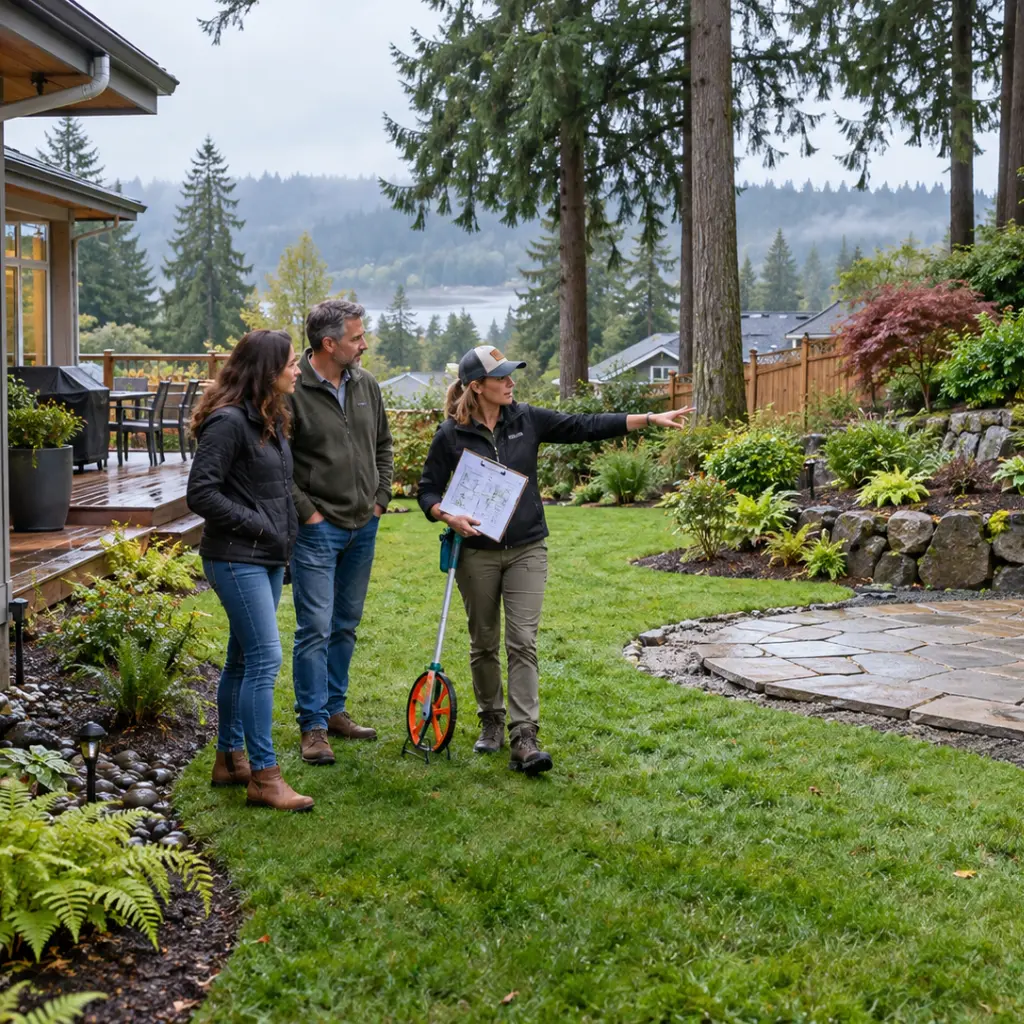
A licensed landscape contractor can assess your lot’s soil, slope, and drainage during a free site consultation.
Step 3: Compare Retaining Wall Materials
The right retaining wall material depends on the wall height, soil pressure, design style, budget, drainage needs, and surrounding landscape. In Oregon, materials should be chosen for both appearance and wet-season performance.
Common retaining wall materials include:
- Segmental concrete block
- Natural stone
- Timber
- Poured concrete
- Boulder walls
- Brick
- Concrete masonry units
- Decorative wall block
Each material has different benefits.
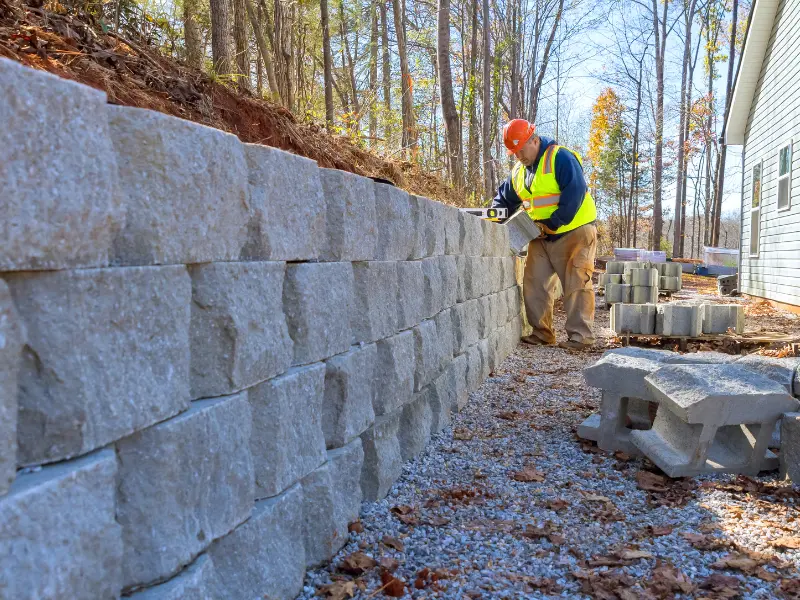
Segmental Concrete Block
Segmental concrete block is a common choice for Portland retaining walls because it works well for many residential landscapes. It offers a clean look and can be engineered for different wall heights.
Good for:
- Backyard walls
- Garden terraces
- Patio support
- Modern landscape designs
- Sloped yards
Natural Stone
Natural stone gives a more organic Pacific Northwest look. It works well near native planting beds, shaded garden areas, and properties with a natural landscape style.
Good for:
- Garden walls
- Decorative retaining walls
- Natural landscape designs
- Front yard accents
- Informal pathways
Timber
Timber can work for some smaller walls, but it may not last as long as masonry or concrete options in wet Oregon conditions. Homeowners should consider moisture exposure and long-term maintenance.
Good for:
- Smaller garden walls
- Budget-conscious projects
- Informal yard areas
- Shorter-term landscape needs
Poured Concrete
Contractors may use poured concrete for structural retaining walls when strength, height, or site conditions require it. They can also finish or face it for a cleaner appearance.
Good for:
- Structural wall needs
- Tall retaining walls
- Steeper slopes
- Modern outdoor spaces
- High-pressure soil areas
The best material depends on the property, so a contractor should explain why one material fits the site better than another.
Step 4: Understand Permits Before Construction
Homeowners often ask: do I need a permit for a retaining wall in Oregon? The answer depends on wall height, location, slope, surcharge, and local building rules. In Portland, retaining walls often need permits when they are over 4 feet high or when they support extra weight.
Permit concerns may apply when the wall supports:
- A driveway
- A patio
- A structure
- A fence
- A steep slope
- Another wall
- Heavy soil pressure
- Drainage changes
- Outdoor living features
Contractors typically measure retaining wall height from the bottom of the footing to the top of the wall, not just the visible section above ground. This matters because a wall may appear short from the yard but still require review due to its footing depth or load.
Homeowners should ask the contractor:
- Will this wall need a permit?
- Will engineering be required?
- How is wall height measured?
- Is the wall supporting a surcharge?
- Will drainage changes affect the permit?
- Are there city or county requirements?
- Are wetlands or natural areas nearby?
A reliable contractor should discuss permit needs before construction starts, which helps reduce delays, redesigns, and compliance problems.
Step 5: Ask How Much It Costs to Build a Garden Wall
Many homeowners ask how much it costs to build a garden wall. The cost depends on wall size, material, height, access, excavation, drainage, backfill, permits, and whether the wall is decorative or structural.
Main cost factors include:
- Wall height
- Wall length
- Material choice
- Site access
- Slope condition
- Excavation needs
- Drainage system
- Base preparation
- Backfill material
- Permit or engineering needs
- Steps, caps, lighting, or planting details
A small decorative garden wall costs less than a structural retaining wall that supports a patio, driveway, slope, or saturated soil. Because each property has different conditions, Portland homeowners should avoid relying only on broad online price ranges.
A garden wall may be less expensive when:
- The site is easy to access
- The wall is short
- The soil is stable
- Drainage needs are simple
- No permit is required
- Materials are standard
A garden wall may cost more when:
- The wall is tall
- The site is sloped
- Equipment access is limited
- Drainage issues exist
- Engineering is required
- The wall supports heavy loads
- Extra excavation is needed
The most accurate way to understand pricing is through an on-site quote. A contractor can review the slope, soil, access, drainage, and wall purpose before giving a clear estimate.
Portland Metro homeowners often begin with a free quote to confirm design scope and seasonal timing before committing.
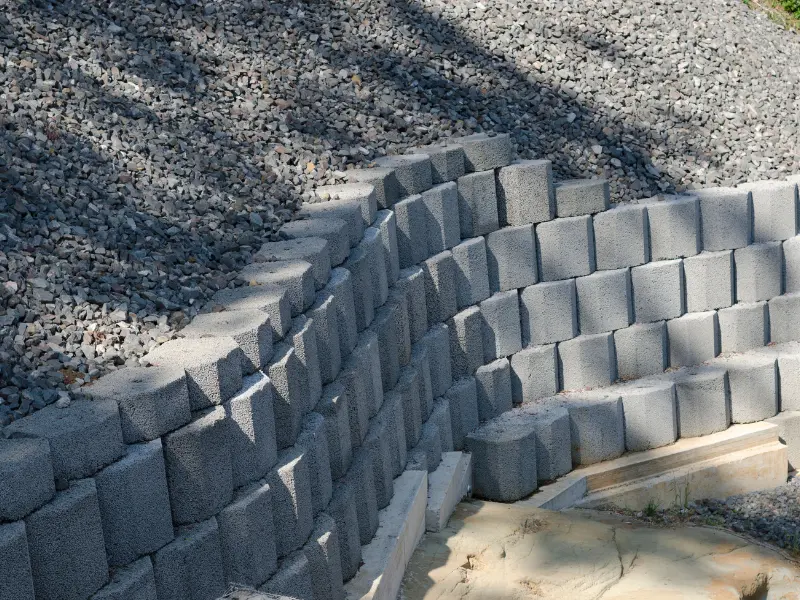
Step 6: Review the Full Installation Process
A professional Retaining Wall Oregon installation should follow a clear process. Each step helps the wall stay stable, drain properly, and fit the surrounding landscape.
A typical retaining wall process includes:
- Site visit and slope review
- Wall layout planning
- Permit review
- Material selection
- Excavation
- Base preparation
- First course leveling
- Drainage installation
- Wall construction
- Reinforcement if needed
- Backfill and compaction
- Cap installation
- Final grading
- Cleanup
- Planting or hardscape finishing
The first course is especially important because it sets the level for the rest of the wall. If the base is weak or uneven, the wall can shift over time.
Contractors should also install drainage during construction, not add it later, since a wall without proper drainage can trap water behind it and increase pressure during Oregon’s rainy months.
Step 7: Look for a Contractor Who Plans Beyond the Wall
Also a retaining wall should fit the full landscape design. In Portland yards, a wall may create space for a patio, garden, lawn, pathway, or outdoor seating area. If the contractor only builds the wall without planning nearby features, the yard may feel unfinished.
A complete retaining wall design may include:
- Paver patio installation
- Landscape steps
- Garden terraces
- Native planting beds
- Drainage swales
- Irrigation changes
- Outdoor lighting
- Mulch or soil amendments
- Fire pit seating areas
- Pathway connections
- Lawn leveling
- Privacy planting
Grover’s Landscape Services & Design provides custom design-build landscaping, which means retaining walls can be planned alongside patios, planting, lighting, drainage, and long-term maintenance.
Additionally, this approach works well for Portland, Lake Oswego, Beaverton, Tualatin, Clackamas, Sherwood, Wilsonville, and West Linn properties, where outdoor spaces often need more than one improvement to function well.
Frequently Asked Questions
How much does a retaining wall cost in Oregon?
A retaining wall in Oregon costs different amounts based on height, length, material, drainage, excavation, access, engineering, and permit needs. A small garden wall costs less than a structural wall supporting a slope, patio, driveway, or saturated clay soil. A free site quote gives the most accurate price.
Do I need a permit for a retaining wall in Oregon?
You may need a permit for a retaining wall in Oregon when the wall exceeds local height limits, supports extra loads, changes drainage, or needs structural review. In Portland, walls over 4 feet often require permits, so homeowners should confirm city or county rules before construction begins.
What material is best for retaining walls in Oregon?
The best material for retaining walls in Oregon depends on height, slope, drainage, soil pressure, style, and budget. Segmental concrete block, natural stone, timber, and poured concrete are common options. In fact, in Portland’s wet climate, proper drainage behind the wall is as important as the visible wall material.
How tall can a retaining wall be without a permit?
In Portland, a retaining wall generally needs a permit when it’s over 4 feet high or supports extra weight. Contractors typically measure wall height from the bottom of the footing to the top of the wall. Also other Oregon cities and counties may have different requirements, so local rules should be checked first.
How long does retaining wall installation take?
Retaining wall installation can take a few days to several weeks depending on size, height, material, drainage, excavation, access, permits, and weather. In addition, a small garden wall may move quickly, while a tall retaining wall on a sloped Portland lot usually needs more planning and site work.
Can a retaining wall help with drainage problems?
A retaining wall can help with drainage problems when a contractor designs it with proper grading, drainage rock, pipe, backfill, and safe water discharge. Also a wall without drainage can make water issues worse, so in Oregon, homeowners should always plan retaining walls around wet-season runoff and soil saturation.
Get a Free Retaining Wall Quote in Portland
However, Grover’s Landscape Services & Design helps Portland homeowners plan and build retaining walls that support slopes, improve outdoor space, manage drainage, and fit Oregon site conditions. As a family-owned Oregon landscaping company since 1995, Grover’s Landscape Services & Design brings licensed local experience to structural landscape projects.
Call Grover’s Landscape Services & Design at (503) 936-8910 to request a free quote and find the right retaining wall plan for your Portland property.