
What Does Hardscape Maintenance Service Involve in Clackamas, OR?
Category Hardscaping
What Does Hardscape Maintenance Service Involve?
Keeping the joints full and the surface clear, mostly. A paver patio does not fail because the pavers wear out. It fails because the sand between them washes away. Everything else follows from there. That makes the least glamorous part of hardscape maintenance service the part that actually matters.
By Yuriy Cheshev, Owner · Last updated September 21, 2026
Why Does Joint Sand Matter More Than the Pavers?
Because the joints are what make an interlocking system interlock.
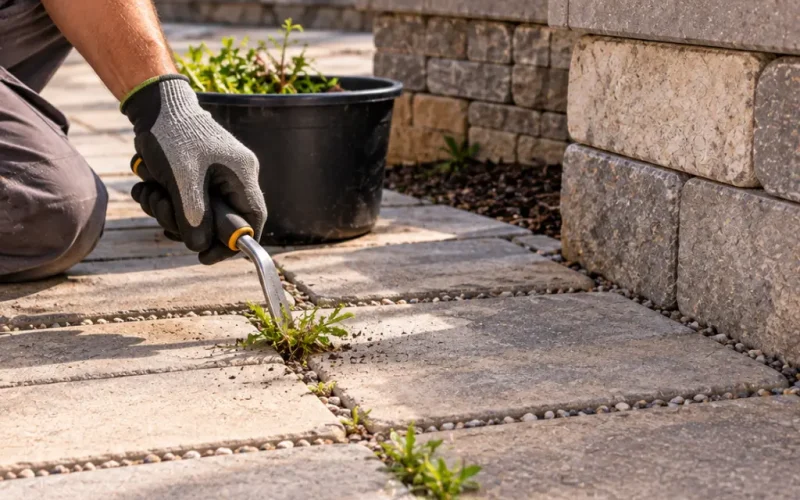
Hardscape maintenance Clackamas OR properties need starts here, because pavers do not work as individual units. They work as a field held in place by the sand between them, which transfers load sideways from one paver to the next. Take that sand away and each paver becomes a loose object sitting on a base.
The sequence is predictable once it starts. Sand washes out through rain, pressure washing or simple time. Pavers begin to shift, because nothing is holding them laterally. Edges drop and gaps widen, which lets more water down into the base. The base starts to move, and at that point you are no longer looking at maintenance, you are looking at a lift and relay.
That is why joint sand replacement and moss removal Clackamas patios need is not a cosmetic job. Catching it at stage one costs a fraction of catching it at stage four.
Two things to know about the sand itself. Polymeric sand binds when activated with water and resists washout far better than plain sand, which is why it is worth specifying. It also has to go in dry, into dry joints. Crews then activate it properly. Getting that step wrong causes more early joint failures than anything else.
Why Is Moss the Local Problem?
Because this is the Willamette Valley, and moss grows on anything that stays damp.
On a paver surface moss does three things. It holds moisture against the surface and in the joints, which keeps the problem self-sustaining. It works into the joints and displaces sand, contributing directly to the washout above. And it makes the surface genuinely slippery, which on a patio or a walkway is a safety matter rather than an appearance one.
Shade is the main variable. A north-facing patio under Douglas fir needs attention several times more often than an open south-facing one a few feet away. The same goes for areas under gutters or downspout discharge.
Prevention is unglamorous. Keep debris off the surface. Keep water moving away rather than pooling. Cut back overhanging growth that keeps the area shaded and damp. Removing moss without changing the conditions that grew it buys a season.
What Does Sealing Actually Do?
Does sealing pavers help against Pacific Northwest winters? Honestly, not in the way it is usually sold, and it is worth being straight about this before you spend money on it.
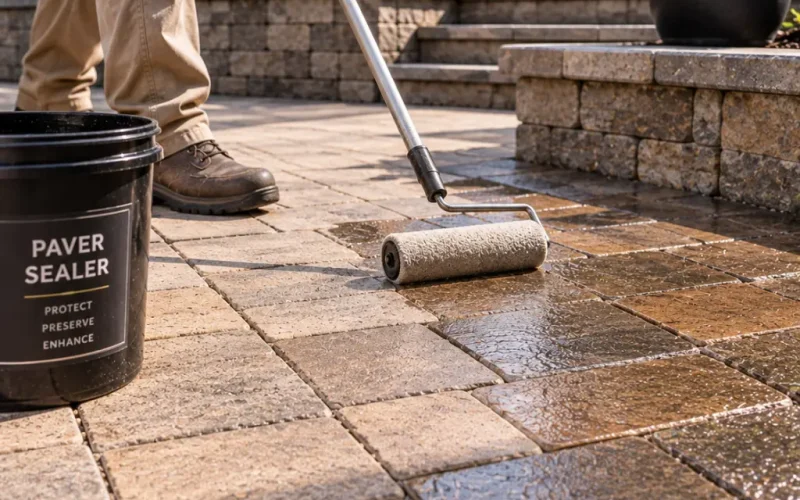
Sealer does two useful things. It resists staining, which matters near a barbecue, a fire pit or a parking area. And with the right product it can help stabilise joint sand, which is a genuine benefit given everything above.
What it does not do is more important. Sealer does not prevent freeze-thaw movement. Nor does it compensate for a base someone built badly. Open joints still let water into the system. And no sealer holds together a patio that is failing underneath.
Three cautions specific to a wet climate. Sealing over a damp substrate traps moisture, which produces haze or a milky blush that is difficult to reverse. Timing is therefore narrow here, since you need a genuinely dry spell before and after application. And some sealers make a wet surface slippery, which on a rainy-season walkway is a real consideration rather than a footnote.
So, is the paver cleaning and sealing that Clackamas OR homeowners get quoted actually worth buying? Cleaning almost always. Sealing sometimes. Neither substitutes for fixing drainage or joints. What protects a hardscape through an Oregon winter is base, drainage and full joints. Sealer is a finish on top of those.
What’s the Right Cleaning and Sealing Schedule for Pavers?
How often should pavers be cleaned and sealed? That depends on exposure rather than a calendar, and the two halves of the question have different answers.
Shade, tree cover and surface water drive the cleaning interval. A shaded patio under conifers needs it far more often than an open driveway. Keeping debris off the surface between cleans extends the interval more than anything else you can do.
Sealing intervals depend on the product, the traffic and the exposure. Take any specific figure from the manufacturer guidance for the sealer you actually use. Be wary of anyone quoting a fixed number of years without asking what is on your patio.
Check joint sand annually. It takes minutes. Sweep a stiff brush across the joints. If sand moves freely, act now. If the depth has dropped well below the paver surface, the same applies.
Avoid high-pressure washing entirely. It strips joint sand faster than weather does, and on some surfaces it takes the paver face with it. It is the commonest way a well-meaning homeowner creates the problem this whole article is about.
What Should a Maintenance Plan Cover?
A recurring plan makes sense on some properties and not others, and the difference is exposure.
Where it earns its keep: heavy tree cover, shaded aspects, surfaces under downspout discharge, and any hardscape where moss keeps returning. Where it probably does not: an open, sunny patio that stays clear on its own.
A plan worth paying for covers four things. The clean itself. Joint inspection and topping up where sand has dropped, which is the item that prevents the expensive failure. Drainage check, since standing water is the root cause behind most of the rest. And an actual look at the structure: edge restraints, settlement, and any movement in retaining elements. Catching those early saves the real money.
Anyone asking which company near me offers seasonal hardscape upkeep should ask what a visit inspects, not just what it cleans. Cleaning is the visible part. Inspection is the valuable part.
What Should You Expect to Pay for Hardscape Maintenance?
How much does hardscape maintenance cost? It depends on surface area and access. Growth and debris matter too, along with the state of the joints and which activities you want.
Three things that move a quote more than square footage. How much joint sand needs replacing, since that is material plus labour rather than just a clean. Whether the site needs drainage work, which is a different scope again. And whether the quote covers sealing, which changes the shape of the job because of the drying windows it needs.
Ask any quote to separate cleaning, joint work and sealing as line items. Bundled into one figure, you cannot tell whether the expensive part of the work is being done or skipped.
Estimates are free. We work across Clackamas, Lake Oswego, West Linn, Tualatin and the wider Portland metro. Our locations page lists them all, and our Clackamas page covers this area specifically.
New installations and repairs sit on our hardscape construction page, ongoing grounds work on maintenance services, and drainage or grading questions often start with irrigation. Completed work is in the gallery.
On credentials, Oregon requires contractors to hold a Construction Contractors Board licence. Ours is CCB #100592, and you can check any Oregon contractor free on the CCB licence search. Whether you’re searching for the best hardscape maintenance service near Clackamas OR, or asking who maintains paver patios near me and who cleans and seals pavers in the area, start with the CCB number, then ask about the joints.
Materials and Brands We Use for Hardscape Repairs
Wherever possible, we match what’s already on the property rather than mixing product lines. Our stock includes Belgard, Mutual Materials, Pavestone, and Techo-Bloc pavers, along with Pacific Northwest basalt and granite for stone walls and steps. For retaining wall repairs and reinforcement, we use Allan Block and Keystone engineered systems, chosen because they’re built for exactly the freeze-thaw movement and clay-soil pressure that cause Clackamas walls to fail in the first place.
Hardscape Repair Across Clackamas and the Portland Metro
Our crews are out across Clackamas regularly enough that we recognize the pattern on sight: Clackamas Town Center and the surrounding neighborhoods, Mount Scott, Mount Talbert, Sunnyside, Sunrise, the Damascus edge, Pleasant Valley, the Clackamas Industrial Area along I-205, and the 82nd Avenue commercial corridor. We also repair hardscape for HOAs, apartment communities, and business parks across the area, not just single-family homes.
Beyond Clackamas, we handle the same paver and retaining wall repairs across Lake Oswego, West Linn, Wilsonville, Tualatin, Sherwood, Beaverton, and Hillsboro — the whole southern and western Portland metro shares the same clay soil and wet-winter problems.
Frequently Asked Questions
How much does hardscape maintenance cost in the Clackamas area?
We quote most hardscape maintenance per visit rather than per square foot. Two patios of identical size can need completely different work. A routine clean on an open, well-drained surface sits at the low end. A clean plus full joint sand replacement costs noticeably more, since that adds material to the labour. Anything involving drainage correction gets quoted as a separate job. Sealing, where it suits the surface at all, prices separately again because of the drying windows it needs.
How often should pavers be cleaned and sealed here?
Cleaning, once or twice a year for most Clackamas properties, and toward the higher end of that if the surface sits under trees or in shade. Joint sand, check annually and top up as needed, which takes minutes with a stiff brush. Sealing, far less often than cleaning, and only on a genuinely dry spell. Take any specific sealing interval from the manufacturer guidance for the product you apply. Treat a fixed number of years, quoted by someone who has not seen your patio, as a sales number.
Do you offer recurring seasonal hardscape maintenance plans?
Yes, and they make most sense on shaded properties, under heavy tree cover, or anywhere moss keeps returning. A plan covers four things. The clean itself. Joint inspection, topping up sand where it has dropped. A drainage check. And a look at edge restraints and settlement. That last item is the one that saves real money, because movement caught early is a repair and movement caught late is a lift and relay.
Do you remove moss and replace washed-out joint sand?
Yes, and joint sand is the more important of the two. Pavers hold together by transferring load sideways through the sand between them. Once that sand washes out, individual pavers shift. Edges drop, gaps widen, and water reaches the base. Moss makes it worse by holding moisture and working into the joints. We refill with polymeric sand where it suits the joint, since it resists washout far better than plain sand. It has to go into dry joints, and the crew has to activate it properly, or it fails early.
Does sealing pavers help against Pacific Northwest winters?
No, not against winter damage specifically. Sealer resists staining and, with the right product, helps stabilise joint sand, both genuine benefits. But it does not prevent freeze-thaw movement, does not compensate for a poorly built base, and will not hold together an installation already failing underneath. Three local cautions. Sealer over a damp substrate traps moisture and leaves a haze. The dry window here is narrow. And some sealers make a wet surface slippery.
Contact Grover’s Landscape Services and Design
Grover’s Landscape Services and Design CCB #100592 · Serving Clackamas, Lake Oswego, West Linn, Tualatin, Portland and the wider metro.
Patio looking tired, or joints looking empty? Request a free estimate, and run a brush across the joints before you call so you can tell us what you find.