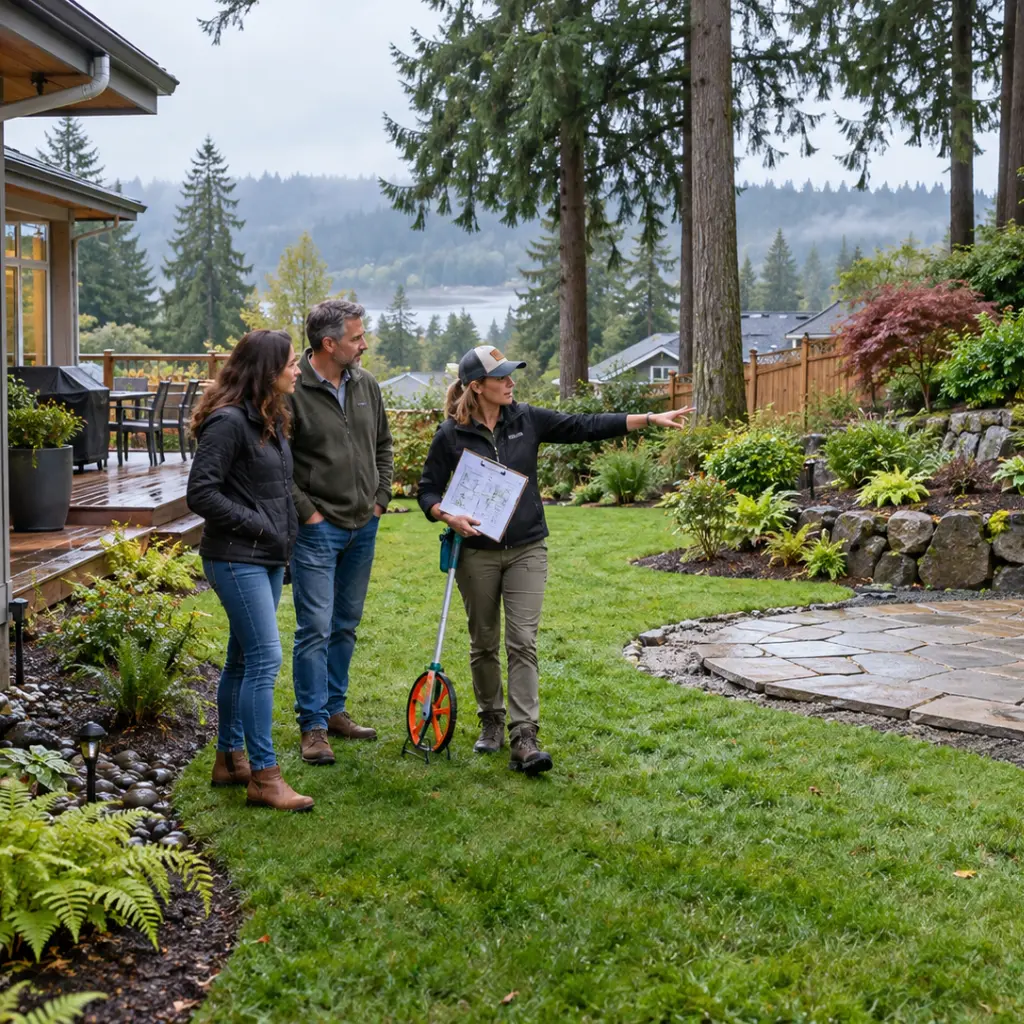


Why Does Seasonal Landscape Cleanup Matter in West Linn?
Category Hardscaping
Why Does Seasonal Landscape Cleanup Matter in West Linn?
More than curb appeal, once you factor in the slope. Seasonal Landscape Cleanup resets a property between growing seasons. In West Linn specifically, it also protects drainage on hillside lots. Many drain straight toward Trillium, Johnson, or Tanner Creek. A missed fall cleanup here can mean more than messy beds.
By Yuriy Cheshev, Owner · Last updated September 28, 2026
What Seasonal Landscape Cleanup Actually Covers
Two different jobs, not one job done twice a year.
Fall and spring cleanups aren’t the same service with different timing. Fall prepares a property for winter. It clears what could cause damage over the wet season: leaves, debris, dying growth. Spring resets the property for the growing season instead. It opens beds back up, refreshes mulch, and gets irrigation running again. Both matter. They solve different problems.
Most West Linn properties need the fall visit more than the spring one, given how much tree cover sits on hillside lots here. Our maintenance services page covers the full year-round program if you want ongoing care rather than a one-time reset.
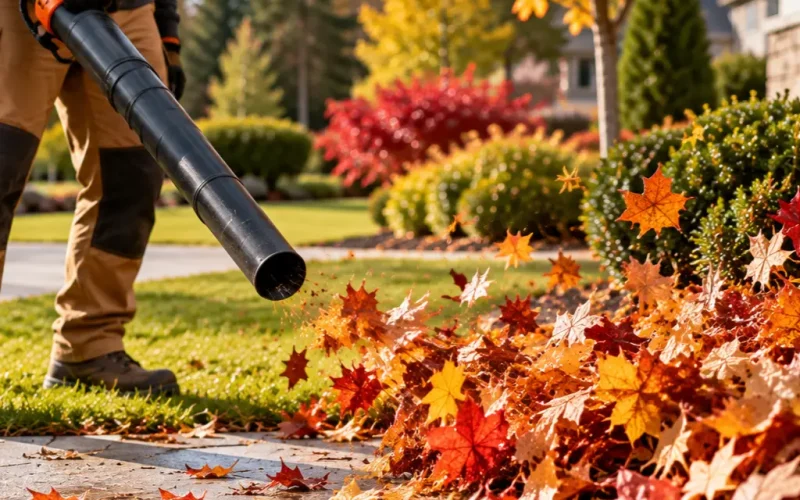
Why Fall Leaf Cleanup Matters More on West Linn Hillsides
Leaves left in the wrong spot here don’t just look messy. They cause a specific, documented problem.
The City of West Linn’s own stormwater fact sheet states it plainly. Every storm drain and catch basin in the city empties straight into local streams, untreated. The City monitors water quality at Trillium Creek, Johnson Creek, and Tanner Creek specifically. Those three drainages carry most of the city’s runoff. Roughly 75 percent of the city’s 47 inches of annual rain falls between October and March. That’s exactly when fall leaf drop peaks.
On a flat lot, leaves pile up and eventually get raked. On a West Linn hillside lot, wet leaves wash downslope with every rain. They collect in drainage swales, catch basins, and culverts before anyone notices. A blocked catch basin on a slope doesn’t just pool water. It redirects it. Often that means toward a foundation, a retaining wall, or straight toward the creek the debris was supposed to stay out of.
A proper fall cleanup on these lots starts at the drainage points, not the lawn. We clear catch basins, swale inlets, and culvert openings first. Then we move to general leaf pickup. The City’s leaf cleanup page asks residents to keep storm drains clear for exactly this reason. On a hillside property, that guidance matters more than it does on flat ground.
Conifer needles complicate the picture too. West Linn’s tree canopy mixes big-leaf maples and oaks with Douglas fir and cedar, and needles behave differently than broad leaves once they’re wet. They mat down into a dense layer that sheds water on the surface rather than letting it soak in, which means a needle-clogged swale can back up almost as fast as one packed with leaves. A cleanup that only budgets time for raking leaves often misses this until the next hard rain.
How Spring Cleanup Differs From Fall on West Linn Properties
Spring cleanup solves the opposite problem. It’s about growth, not runoff.
After a wet Oregon winter, beds compact, mulch breaks down, and perennials that died back need cutting. A spring cleanup and bed refresh usually means clearing winter debris from beds. It also means cutting back what didn’t survive, refreshing mulch before summer heat arrives, and restarting irrigation systems that sat dormant. On a hillside property, spring is also when we check whether winter runoff moved mulch or soil downslope. Heavy rain can strip a bed nearly bare by March.
Timing matters both directions. Cut back perennials too early and a late frost can damage new growth. Wait too long on mulch refresh and weeds get a head start before the beds are reset. We time both cleanups to the season, not a fixed calendar date. That shifts slightly year to year depending on how wet or dry the winter runs.
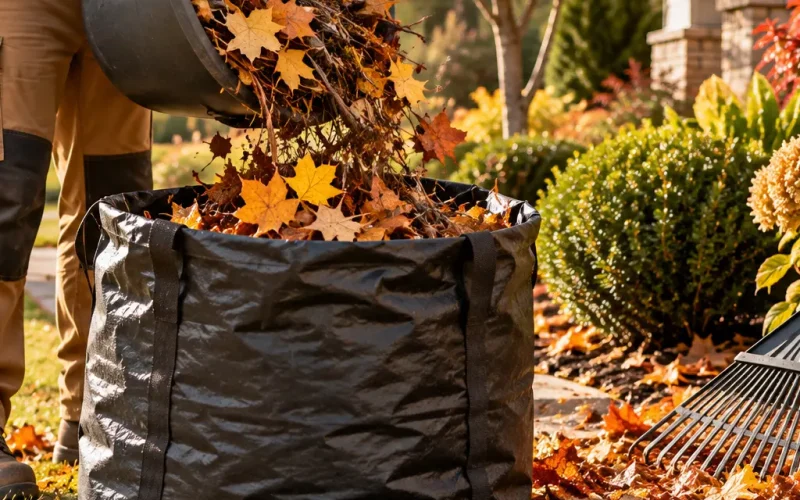
Who Does Fall Leaf Cleanup in West Linn?
Ask whether they clear drainage points first or just the lawn.
Whether a company offers recurring seasonal cleanups is worth asking directly. A one-time cleanup and a standing fall-and-spring plan are different commitments. A recurring plan means the drainage checks happen every season automatically, rather than depending on whether you remember to call.
Grover’s has worked West Linn’s hillside lots since 1995, holding Oregon CCB #100592. That’s verifiable through the state’s contractor license search. Anyone comparing the best seasonal cleanup service near West Linn should ask specifically whether drainage and catch basins are part of the fall visit, not just leaf pickup on the lawn.
We serve West Linn’s Willamette, Sunset, Bolton, Robinwood, Marylhurst, Rosemont Summit, Skyline Ridge, and Tanner Basin neighborhoods, plus the wider Portland metro. See our West Linn service area page and maintenance services page for the full program. Estimates are free.
Debris disposal matters here too, not just pickup. West Linn’s own guidance is clear on this: leaves that fall into your yard are your responsibility, not the City’s, and they shouldn’t end up blown into the street or a storm drain. We haul everything to proper disposal rather than pushing debris to the curb, which keeps your property compliant with that guidance without you having to think about it.
Frequently Asked Questions
How much does a seasonal landscape cleanup cost in West Linn?
Property size and slope drive the price more than the season does. A flat, open lot costs less to clear than a wooded hillside property. Hillside cleanups need extra time at drainage points and often extra hauling, given how much material collects on a slope. We quote from a site visit rather than a flat per-yard rate, since two similarly sized West Linn lots can need very different amounts of work.
What is included in a seasonal cleanup?
Fall cleanup covers leaf removal, gutter and drain clearing, perennial cutbacks, a final mow, and irrigation winterization. Spring cleanup covers bed cleanout, mulch refresh, pruning, fertilization, and irrigation startup. On a hillside property, both visits also include checking drainage swales and catch basins. That’s a step flat-lot cleanups don’t need.
When is the best time for fall and spring cleanups?
Fall cleanup works best once most leaves have dropped but before the heaviest rain arrives, usually mid-to-late November in this area. Spring cleanup works best once the hardest frost risk has passed but before beds have gone fully to weeds, typically March into April. Both windows shift a little year to year depending on the weather. That’s why we schedule off current conditions rather than a fixed date.
Do you offer recurring seasonal cleanup plans?
Yes. Most West Linn clients land on two visits a year, one in fall and one in spring. Some add a mid-summer check for hillside properties with heavy tree cover. A recurring plan also means we’re already familiar with your property’s specific drainage points each time, rather than relearning the site on every visit.
Do you haul away leaves, branches and green waste?
Yes, hauling is included in every cleanup. For West Linn specifically, that also means keeping debris out of the street and storm drains. That’s consistent with the City’s own leaf cleanup guidance, rather than blowing material to the curb and letting the next rain carry it into a catch basin.
Contact Grover’s Landscape Services & Design
Grover’s Landscape Services & Design Serving West Linn and the Portland metro Phone: (503) 936-8910 Hours: Monday to Friday, 8:00 a.m. – 5:00 p.m. Family-owned since 1995, Oregon CCB #100592, serving West Linn, Lake Oswego, Beaverton, Tualatin, Sherwood, Wilsonville, Clackamas, Newberg, and Salem.
Worried about leaves clogging drainage on a slope? Request a free quote or call (503) 936-8910, and we’ll check the drainage points before we quote the cleanup.