
Who Offers Planting Services Near Me in West Linn?
Category Hardscaping
Who Offers Planting Services Near Me in West Linn?
Grover’s Landscape Services & Design offers planting services in West Linn. If you’re searching for planting services near me, we design and install trees, shrubs, and garden beds with one crew. We’ve worked West Linn’s hillside lots since 1995 (Oregon CCB #100592). On a lot draining toward Trillium, Johnson, or Tanner Creek, plant choice affects whether the slope holds together through a wet Oregon winter, or slowly washes downhill. West Linn’s hillside terrain and clay-heavy soil make the plant list matter more here than in a flat suburban yard.
By Yuriy Cheshev, Owner · Last updated September 30, 2026
Why Does Planting on a West Linn Slope Matter Beyond Looks?
A shallow-rooted annual bed looks fine in July and does nothing for the soil underneath it in January.
Tree and shrub planting West Linn hillside lots actually need is chosen as much for root structure as for appearance. Deep-rooted native shrubs and small trees bind soil in a way that shallow bedding plants simply can’t. That matters directly on a slope where, according to the City of West Linn’s own stormwater fact sheet, roughly 75 percent of the area’s 47 inches of annual rain falls between October and March. A planting plan that ignores this can look attractive the day it goes in and still contribute to erosion within a season or two.
Clay soil compounds the problem. It holds water at the surface instead of letting it drain through. A plant that can’t tolerate occasional standing water won’t survive its first wet winter here, however well it was planted. The right plant list solves both problems at once: root systems that stabilize the slope, and species that tolerate the soil they’re going into.
Which Plants Actually Handle Wet Winters and Shade Here?
Two different problems, and the plant list has to solve for both.
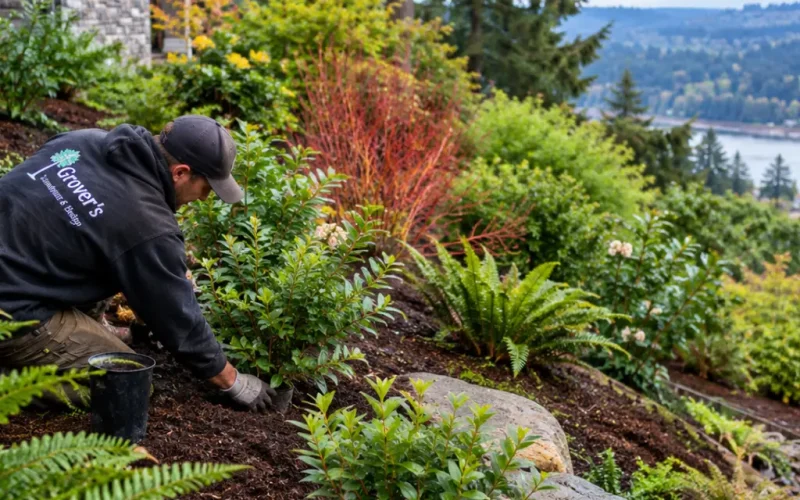
Wet winters call for species that tolerate periodic standing water without root rot. That rules out many popular ornamentals. They look great in a nursery photo but die after their first soggy January. Pacific Northwest natives such as red-twig dogwood and sword fern evolved for exactly this rainfall pattern. That’s why they hold up where imported ornamentals often don’t.
Shade adds a second filter. Much of West Linn’s tree canopy keeps most of the yard out of direct sun, especially on older, more wooded lots. Understory species grow naturally beneath conifers, including salal, Oregon grape, and certain ferns. They handle low light without stretching thin or refusing to flower.
- Wet winter clay soil: Tolerates periodic standing water, doesn’t need fast drainage to survive
- Deep shade under conifers: Naturally an understory species, doesn’t need full sun to thrive
- Slope or erosion risk: Deep or spreading root system (such as red-twig dogwood), works as living ground cover
- Summer dry spells: Drought-tolerant once established, doesn’t need constant irrigation
A good first question for any planting company is, “Do you choose plants suited to wet winters and shaded lots?” A plant list built for a sunnier, drier climate won’t perform the same way here.
Why Does Garden Bed Design and Planting in West Linn Start With Drainage?
A bed that looks good on paper but ignores where water actually moves on the site usually needs replanting within a couple of years.
Garden bed design and planting in West Linn starts with the same drainage points we check on a seasonal cleanup visit. That means swales, catch basins, and the low spots where water collects after a storm. A bed placed where water floods every winter sets the wrong plants up to fail, whatever the species. Placing it slightly uphill, or working the grade first, solves the problem before a single plant goes in the ground.

Why Should One Crew Design and Install Your Planting Beds?
Ask what they’d do differently on a shaded slope versus a flat, sunny yard. A company that gives the same answer for both hasn’t thought about your site.
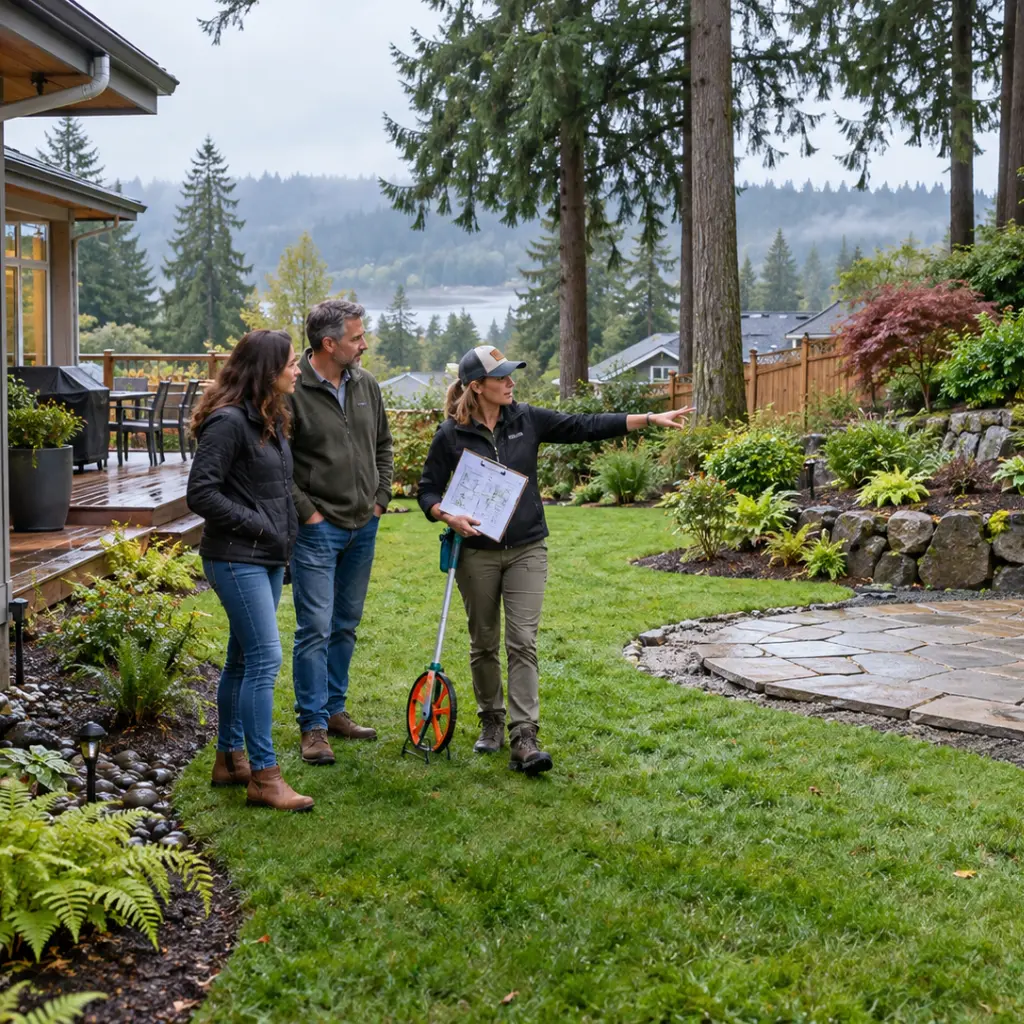
Look for one crew that handles the whole job, from site assessment through planting. That’s true whether you’re asking who plants trees and shrubs in West Linn, or which landscaper near me designs and installs planting beds. The person drawing your bed layout should understand how water moves across your slope. That’s different from someone working off a plan with no site context. That crew should walk your property and check where water pools after rain. Then they build the plant list around what they actually find, not a generic regional list.
Grover’s has worked West Linn’s hillside lots since 1995, holding Oregon CCB #100592, verifiable through the state’s contractor license search. Anyone comparing the best planting service near West Linn should ask specifically how drainage and slope factor into the plant selection. Don’t just ask which species are available.
Planting services West Linn clients hire us for is part of our broader landscape design and development service. It ties directly into the drainage work covered in our seasonal cleanup guide, if you’re dealing with both at once. We serve West Linn’s Willamette, Sunset, Bolton, Robinwood, Marylhurst, Rosemont Summit, Skyline Ridge, and Tanner Basin neighborhoods. We also serve the wider Portland metro. Estimates are free.
Frequently Asked Questions
How much do planting services cost in West Linn?
Cost depends on plant size and quantity, how much bed preparation the site needs, and whether the area requires grading or drainage work before planting starts. A shaded, sloped lot often needs more site prep than a flat, sunny one, even for a similar plant count. We quote from a site visit rather than a flat per-plant rate, since two similarly sized West Linn yards can need very different amounts of prep work.
When is the best time of year to plant here?
Fall is usually the strongest window in this climate, since plants establish root systems through the wet season before facing summer heat and drought stress. Spring works too, though new plantings need closer attention to watering through the first dry summer. We generally steer clients away from planting deep into summer, since establishment gets much harder once the dry season sets in.
Do you guarantee the plants you install?
Yes, on plant material we select and install as part of our design and planting service. Coverage details depend on the specific plants and site conditions, since a plant chosen correctly for a shaded, wet slope should establish reliably, while conditions outside our control, like a client changing the watering schedule we recommend, aren’t covered the same way. We’ll go over exactly what’s covered at the time of installation.
How long does it take for new plants to establish on a slope?
Most shrubs and perennials need their first full growing year to root in, and trees often take longer. Regular watering through that first dry summer matters most, since the drought tolerance of natives like red-twig dogwood and Oregon grape only kicks in once roots are established. We’ll go over a watering plan for your specific plants and slope at installation.
Do you remove existing plants or ground cover before planting?
Bed preparation is part of the planting scope, and what it involves depends on what’s already growing there. We look at this during the site visit, since clearing, regrading, and drainage fixes all affect the quote. We’ll spell out what’s included in your written estimate.
Contact Grover’s Landscape Services & Design
Grover’s Landscape Services & Design Serving West Linn and the Portland metro Phone: (503) 936-8910 Hours: Monday to Friday, 8:00 a.m. – 5:00 p.m. Family-owned since 1995, Oregon CCB #100592, serving West Linn, Lake Oswego, Beaverton, Tualatin, Sherwood, Wilsonville, Clackamas, Newberg, and Salem.
Not sure which plants will actually survive your slope? Request a free consultation or call (503) 936-8910, and we’ll check the drainage before we recommend a single plant.