
Garden Design in Wilsonville, OR
Category Gardening
Why Invest in Garden Design in Wilsonville, OR?
The first decision is whether your goal is beauty, function, or both. In Wilsonville’s climate, those goals usually lead to native plants, low water demands, and a design that holds up through long wet winters and genuinely dry summers. For garden design Wilsonville, OR properties of every size and style, Grover’s Landscape Services & Design has been the team Clackamas County homeowners call since 1995. Call (503) 936-8910 for a free on-site consultation.
By Yuriy Cheshev, Owner · Last updated 22 June 2026
How Do You Design a Garden from Scratch?
In Wilsonville, the answer to designing a garden from scratch differs from most of the country, and that difference starts with the soil. Wilsonville sits in Clackamas County’s Willamette Valley floodplain. There, soils range from heavy Helvetia clay in the upland neighborhoods to silty alluvial deposits closer to the river. Both soil types behave dramatically differently from the sandy or loamy soils featured in most national gardening guides.
A garden design that skips soil assessment is a garden that needs replanting in three years. So our landscape design process starts with a site visit. We evaluate your drainage patterns, your existing soil structure, and how your lot handles the 40+ inches of annual rainfall Wilsonville receives. All of that comes before we recommend a single plant or draw a single layout.
From there, the design process follows a sequence that applies to garden planting services on Clackamas County properties of every size and style:
- Define the use zones. Food gardens, cutting gardens, relaxation spaces, and pollinator habitat each need different light levels, access paths, and maintenance commitments. Sorting these out on paper before digging is what separates a design from a plan.
- Solve drainage first. Clay soils that hold water through winter will drown most ornamental plants and rot vegetable roots. Raised beds, French drains, or amended planting pockets solve the problem permanently, rather than requiring replacement plantings every season.
- Select plants for the actual conditions. A plant that needs six hours of sun in a spot that gets four will never perform, regardless of how beautiful the tag looks at the nursery.
- Layer for year-round structure. In a Pacific Northwest garden, evergreen structure plants carry the visual weight from November through February, when deciduous perennials have died back. Building that layer in from the start means the garden looks intentional in every season.
What Plants Grow Best in Oregon Gardens?
The best plants for an Oregon garden depend heavily on which zone within the state you’re in. For Wilsonville and the Willamette Valley specifically, the performers divide into two clear categories. First, plants that have evolved for the wet-winter, dry-summer rhythm. Second, plants that require supplemental irrigation to survive summer drought.
Our first recommendation for most Wilsonville clients is to build the garden’s foundation from the Pacific Northwest’s native plant palette. These species don’t just survive here; they’ve evolved for this climate without irrigation or soil amendments. Here are the core natives we specify most often for Wilsonville garden designs.
Foundation Natives for Wilsonville Gardens
Oregon grape (Mahonia aquifolium) — evergreen and deeply drought-tolerant once established, with yellow spring flowers and purple fall berries that attract birds. It makes an excellent structural layer along property boundaries or under mature trees.
Red flowering currant (Ribes sanguineum) — blooms vivid pink-red in February and March. That provides critical early nectar for Anna’s hummingbirds and native bees when almost nothing else is flowering. It’s also deer-resistant.
Camas (Camassia quamash) — a stunning blue-purple bulb native to wet Willamette Valley meadows. It thrives in Wilsonville’s clay soils and seasonal wet areas where other plants struggle.
Pacific rhododendron (Rhododendron macrophyllum) — Oregon’s state flower. It tolerates shade, requires no irrigation once established, and provides large-scale structure more climate-appropriate than Asian rhododendron cultivars.
Western sword fern (Polystichum munitum) — the workhorse of Pacific Northwest shade gardens. Near-indestructible once established, it stays evergreen through all but the hardest freezes and requires essentially no care after year one.
Some clients want a native plant garden that Portland, OR and Wilsonville residents have both had success with — one supporting pollinators and reducing irrigation costs. For them, we combine these foundation plants with native perennials. Blue-eyed grass, bleeding heart, and Douglas aster add seasonal color across spring, summer, and fall.
How Much Does a Garden Design Cost in Wilsonville?
Garden design cost in Clackamas County depends primarily on the scope of work. The main split is between design-only services (drawings and plant lists you implement yourself) and a full design-build where Grover’s handles planning and installation.
For design-only work, most residential garden projects in Wilsonville run $500–$2,500 for a detailed planting plan covering one to three garden areas. Full design-build projects run higher — typically $5,000–$25,000+. That’s where we design and install planting beds, prepare soil, install drip irrigation, and plant everything. The final number depends on area size, plant material, and whether hardscape elements like edging, paths, or raised beds are included.
The most consistent driver of cost overruns in Wilsonville is drainage correction not budgeted upfront. When heavy clay soil needs amendment or French drains before planting can succeed, that groundwork adds real cost. Frankly, we’d rather find it during a site visit than after installation has started.
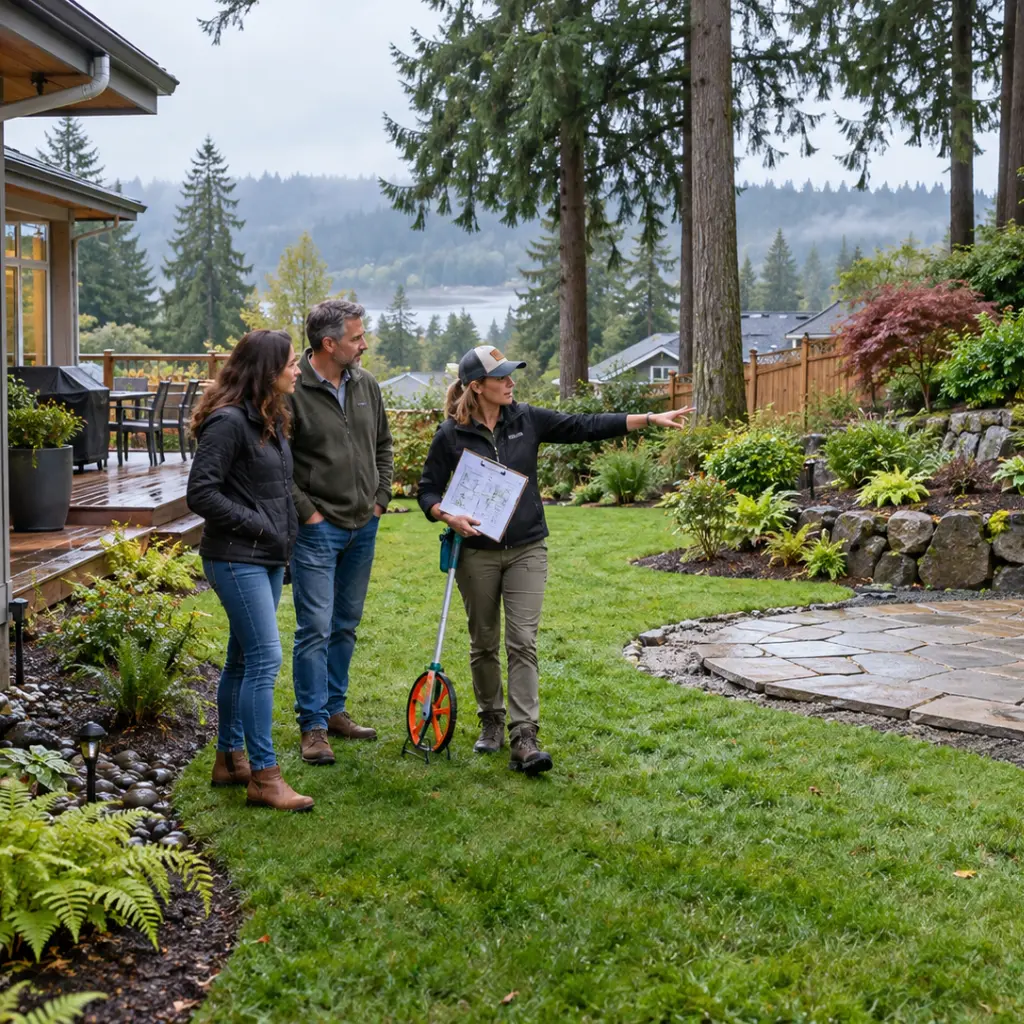
Schedule a free on-site consultation and we’ll walk your property, assess your drainage, and give you a written estimate before any work begins.
What Garden Style Works Best for the Pacific Northwest?
Homeowners often ask which garden style is best for the Pacific Northwest climate. After 30 years of planting gardens across the Willamette Valley, our answer is consistent: the most successful designs are built around the climate’s rhythm rather than against it. In practical terms, that means two things.
Embrace the Wet Season
Oregon’s October-through-April wet season is often treated as an obstacle to work around. However, the most beautiful Wilsonville gardens treat it as an asset. They use it to establish new plantings without irrigation. They also select plants that look their best in winter rain, not just summer sun, and they build beds that drain efficiently rather than sitting in standing water for months.
Plan for Summer Drought
July and August in Wilsonville bring genuine drought conditions. In fact, the city typically receives less than two inches of rain over those two months combined. As a result, gardens designed without considering the summer-dry period require aggressive irrigation to survive. Pollinator garden design Willamette Valley style, by contrast, leans on drought-tolerant natives and Mediterranean-climate ornamentals like lavender, catmint, and agastache. These bloom through the dry season while supporting native bees without supplemental water.
Styles That Fit Wilsonville
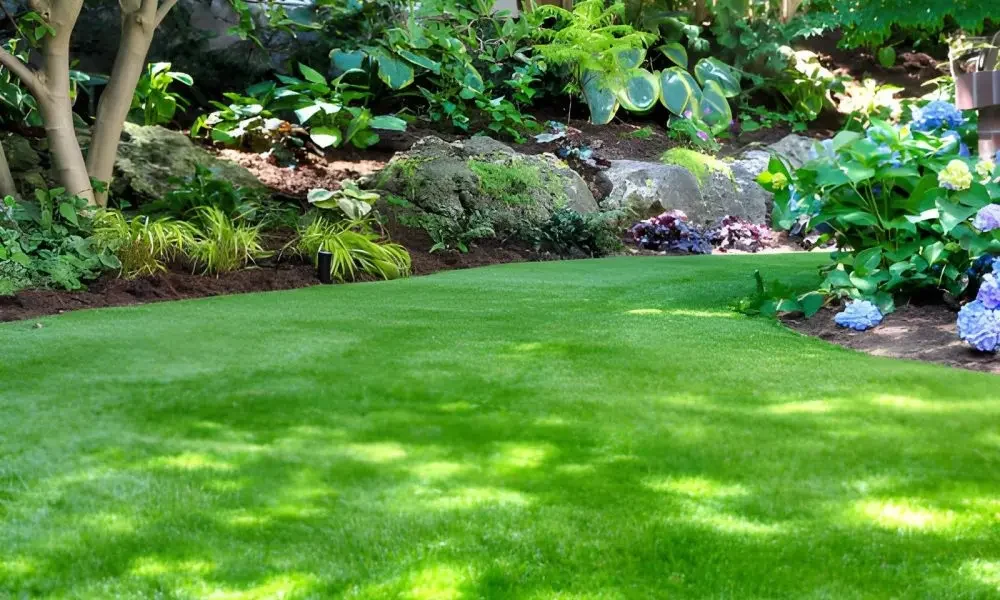
A few garden styles translate most naturally to Wilsonville’s conditions. The Pacific Northwest naturalistic style uses native-dominant, informal drifts with seasonal structure. The cottage-influenced perennial border performs beautifully in the wet season and needs only targeted summer irrigation for the annuals. Finally, the edible garden accepts summer irrigation as part of the food production commitment.
For Wilsonville properties along the Willamette River, the naturalistic style is also often the practical choice. The city’s Willamette River Greenway overlay zone — which extends 150 feet from the ordinary low water line — has specific planting requirements and restrictions. Properties within this zone benefit from designs built around native riparian plants that meet city standards while still creating genuinely beautiful gardens. Our wetland mitigation experience gives us working knowledge of these regulations that most garden designers don’t have.
Do I Need a Permit for Garden Landscaping in Wilsonville, OR?
For typical residential garden planting — creating or expanding planting beds, installing new garden areas, adding perennials or shrubs — no building permit is required in Wilsonville. Standard garden design and installation falls outside the permit threshold.
However, Wilsonville has specific regulations that affect certain types of garden work. Wilsonville Code section 4.176 governs landscaping, screening, and buffering, and it applies to the materials, placement, and timing of landscape installation. More practically for garden design, tree removal needs a permit. That applies to any tree six inches or more in diameter at breast height. So if your design involves removing existing trees for planting space or light access, that work requires a tree removal permit. You’ll get it through the city’s Planning Division (503-682-4960) before any removal begins.
Properties in the Willamette River Greenway overlay zone have additional requirements. Likewise, any garden work in the Significant Resource Overlay Zone (SROZ) requires advance coordination with city staff. Grover’s has navigated these requirements on Wilsonville projects, and we can confirm which, if any, apply to your specific property before the design process begins.
Wilsonville and Portland Metro Areas We Serve
As the top-rated planting designers in the Portland metro that Wilsonville homeowners call for garden design, Grover’s serves all of Clackamas County and the broader Portland metro. That includes Tualatin, Sherwood, Milwaukie, Lake Oswego, and Oregon City. When clients search for the best garden designers near Wilsonville, OR, they find a team working in actual Willamette Valley soil. We’re not a company applying generic planting plans to Oregon properties.
Our landscape maintenance programs mean the garden we design is a garden we can maintain. The same crew that understands your soil returns each season. That continuity is part of why our client relationships run 20 years or more across Wilsonville and the Portland metro.
Frequently Asked Questions
When is the best time to plant a garden in Oregon?
Fall — specifically September through November — is the single best planting window for most Wilsonville and Clackamas County gardens. The soil is still warm from summer, the rains have returned to provide free irrigation, and plants establish root systems through winter before facing summer drought. Spring (March through May) is the second-best window. Summer planting is possible but requires consistent irrigation through August, adding cost and stress to new plantings.
What native plants thrive in Wilsonville?
Oregon grape, red flowering currant, camas, Pacific rhododendron, western sword fern, blue-eyed grass, Douglas aster, and vine maple all thrive in Wilsonville’s clay-influenced, wet-winter, dry-summer conditions. For sunny spots with summer drought, native bunchgrasses like blue wild rye and Idaho fescue add texture without irrigation demands. The City of Wilsonville actively supports naturescaping programs that encourage native plant use, particularly near streams and wetland buffers.
Do I need a permit for garden landscaping in Wilsonville, OR?
For standard residential garden work, no building permit is required in Wilsonville. That covers new or expanded planting beds, perennials, shrubs, and general garden installation. Two exceptions matter most for garden design. First, removing any tree six inches or more in diameter at breast height requires a tree removal permit through the Planning Division (503-682-4960). Second, properties in the Willamette River Greenway overlay zone or the Significant Resource Overlay Zone (SROZ) have additional requirements and need advance coordination with city staff. Grover’s confirms which rules apply to your property before design begins.
How do you design a low maintenance Oregon garden?
A low-maintenance Oregon garden rests on three things. First, native and climate-adapted plants that don’t need supplemental irrigation after establishment. Second, raised beds or amended soil zones that address drainage rather than fighting clay soils. Third, a layered design with evergreen structural plants that provide year-round presence without seasonal replanting. Adding drip irrigation on a smart timer for any ornamental annuals or vegetables keeps water use efficient. After year two, a well-designed Pacific Northwest native garden typically needs only seasonal cleanup and occasional pruning.
Can I have a year round garden in the PNW?
Yes, with intentional plant selection. Oregon’s mild winters allow many evergreen plants to remain attractive through the wet season. Cool-season vegetables — kale, chard, leeks, winter squash storage crops, overwintered garlic and alliums — also produce actively through winter. Spring bulbs begin in February with crocuses and snowdrops, followed by native camas and red flowering currant. Summer brings perennials and warm-season vegetables. Fall offers late-season asters, ornamental grasses at peak display, and the richest foliage color of the year. A garden designed for all four seasons is entirely achievable in Wilsonville’s climate.
Call or Visit Us
Grover’s Landscape Services & Design Serving Wilsonville, Tualatin, Sherwood, Lake Oswego, Milwaukie, Oregon City, and the Portland Metro Phone: (503) 936-8910 Hours: Mon–Fri 8:00 AM – 5:00 PM Oregon CCB #100592 · Licensed & Insured · Family-Owned Since 1995 · 5.0 Stars on Google