
How Does Landscape Development in Tualatin, OR, Work?
Category Landscaping
How Does Landscape Development in Tualatin, OR, Work?
Landscape development in Tualatin, OR is the build phase — grading, drainage, hardscape, irrigation, and planting installed after a design is approved. Grover’s Landscape Services & Design does all of it with one licensed crew, scheduled around Tualatin’s October 1 erosion control deadline. Family-owned since 1995. Oregon CCB #100592.
By Yuriy Cheshev, Owner · Last updated 4th August 2026
Most articles about landscape development describe a drawing. This one describes the dirt. If you already have a plan and you’re trying to work out what actually happens once machines arrive in a Tualatin backyard — and when they’re allowed to — that’s what follows.
What is landscape development?
Landscape development is the construction phase of a landscape project: clearing, grading, drainage, hardscape installation, irrigation, lighting, and planting carried out to an approved plan. Design produces the drawing. Development puts it in the ground, under permit, with inspections.
The distinction matters because the two phases are priced, permitted, and scheduled differently. A design-only firm hands you a plan and stops. At Grover’s, the same crew that drew the plan builds it, which is why our landscape design and development service is quoted as one scope rather than two.
Development is also where the regulatory weight sits. A drawing doesn’t disturb soil. An excavator does — and in this city, disturbed soil is a permitted activity.
Tualatin’s October 1 rule: the date that runs your build schedule
This is the single most important thing to understand about landscape development in Tualatin, and almost nobody mentions it until it’s a problem.
The City of Tualatin requires wet weather erosion prevention measures to be established by October 1 and to stay effective through the following May 31. Under the city’s erosion control permit requirements, all exposed soil has to have ground cover protection in place by that date. Grass seed alone doesn’t count unless maximum germination is reached by October 1 — if seeding fails, straw, yard debris compost, or erosion control blankets have to go down instead.
Two practical consequences:
A project that starts in September has a hard deadline it did not have in June.
Either the site is stabilized by October 1, or it carries eight months of maintained erosion control measures. That’s real cost and real risk.
Erosion control inspections in Tualatin are performed by Clean Water Services, not the city.
It’s a separate agency, a separate call, and a separate schedule to coordinate. Tualatin’s own erosion control permit categories start at single-family projects disturbing under 1,000 square feet and scale up from there.
We plan backwards from October 1 on every Tualatin build. If a project can’t realistically be stabilized before then, we’d rather tell you in July and stage the work than start it and hand you a wet-season problem. That’s a scheduling judgment a design-only firm never has to make — and a big part of what site preparation and excavation actually involves here.

How long does landscape development take?
A typical residential landscape development project in Tualatin runs four to ten weeks of on-site work, plus two to six weeks of permitting beforehand. Small planting-and-irrigation refreshes finish faster; projects with retaining walls, drainage systems, or wetland proximity take longer because of agency review.
Roughly how the schedule breaks down:
Phase | Typical duration |
Permitting and agency review | 2–6 weeks, longer near regulated resources |
Clearing, grading, drainage | 1–2 weeks |
Hardscape construction | 1–4 weeks depending on square footage |
Irrigation and lighting rough-in | 3–7 days |
Planting, soil prep, and final grade | 1 week |
The variable nobody prices in is weather. From November through April, the valley floor holds water, and excavating saturated clay damages soil structure in a way you pay for later in drainage and plant health. We can build hardscape most of the year. Heavy earthwork is a dry-season activity in this city, and honest scheduling says so.
How much does landscape installation cost in Tualatin?
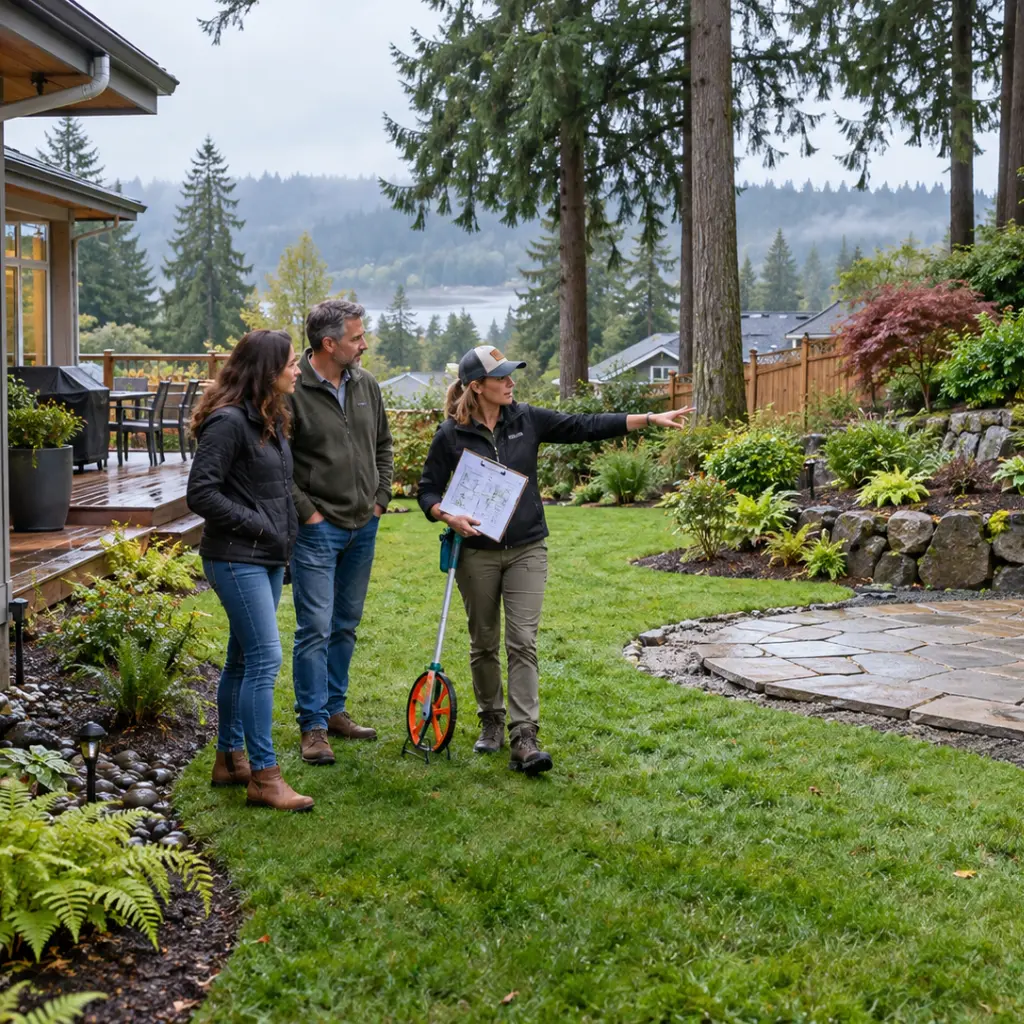
We don’t publish per-square-foot pricing, because the number is driven almost entirely by what’s under the yard rather than what’s on the plan. Every landscape installation Tualatin OR quote we issue is written after a site visit, and it covers materials, labor, and timeline before any work starts.
What actually moves the number here:
- Drainage and grading. On Tualatin’s flat, clay-heavy lots this is frequently the largest line item, and it’s invisible when finished.
- Retaining walls. Under Tualatin Municipal Ordinance 1481-23, walls over four feet — measured from the bottom of the footing to the top of the wall — require a building permit, as does any wall supporting a nonsoil surcharge. Engineering and permit review change the cost profile.
- Regulated resources nearby. Properties near the Tualatin River, Saum Creek, or a mapped wetland can trigger review that adds weeks. Our wetland mitigation work exists precisely because these lots are common here.
- Hardscape square footage and material. Paver patios, walkways, and outdoor kitchens through our hardscape construction crew scale directly with area.
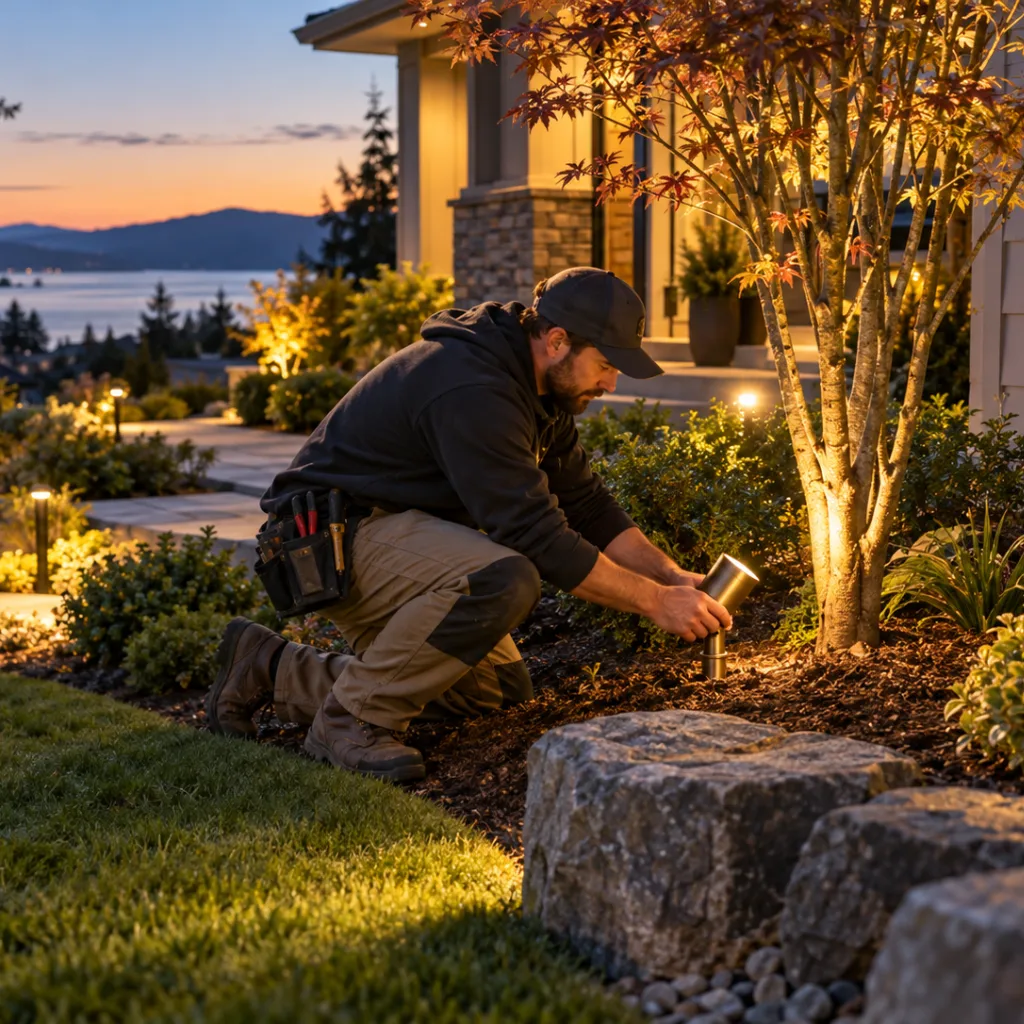
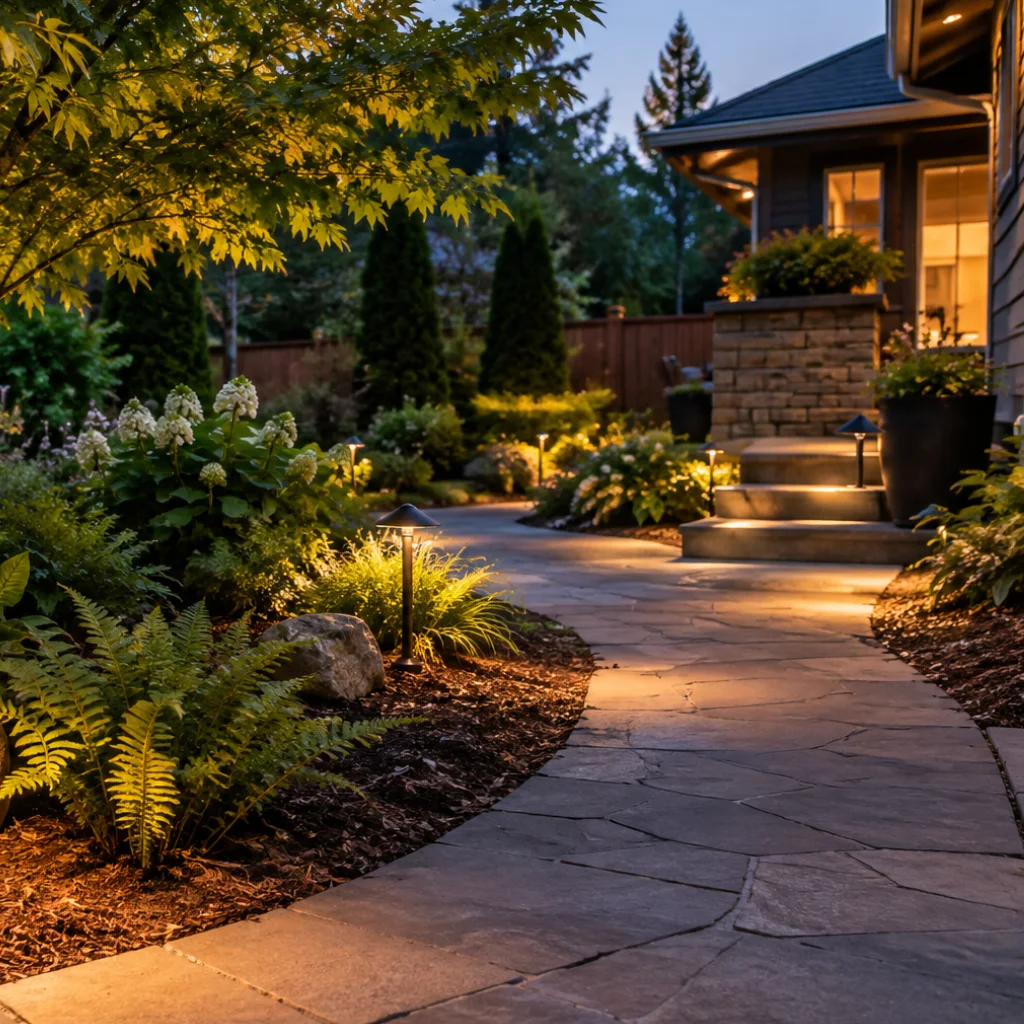
- Systems. Irrigation and landscape lighting are far cheaper installed during development than retrofitted after.
The consultation and the written proposal are free. There’s no obligation to proceed once you have it.
Clay subgrade: the part of landscape construction Tualatin homeowners don’t see
Tualatin sits low on the valley floor, and the soil under most of the city is heavy, slow-draining clay. Every durable landscape construction Tualatin project starts by respecting that.
Three things we do differently on clay than a contractor working sandy soil would:
Deeper base, properly compacted. A paver patio set on a thin base over clay will move by the second winter. We over-excavate, install compacted crushed rock in lifts, and confirm the subgrade drains before a single paver goes down.
Drainage designed as infrastructure, not an add-on. French drains, catch basins, and positive grade away from the foundation are laid out during development, not after the client notices standing water in February near the low corner of the yard.
Planting into amended, not replaced, soil. Clay holds nutrients well. Wholesale soil replacement in a bed is usually the wrong call — amending and grading for drainage produces plants that establish and stay established, which is why the landscapes we built near Jurgens Park and along the Sagert Street corridor twenty years ago still perform.
We’re a licensed landscaping contractor Tualatin OR homeowners can verify: Oregon CCB #100592, with general liability and workers’ compensation on every project. Anyone can claim experience. A license number is checkable.

Where we handle landscape development in Tualatin, OR and nearby cities
Searches like “best landscape development company near me Tualatin OR” and “landscaping contractor near me Tualatin” are usually asking one thing: does this crew know my side of the valley? Ours does.
We install across Tualatin — the Commons and downtown core, the Ibach and Sagert areas, the Boones Ferry and Herman Road corridors, properties along the Tualatin River Greenway, and newer builds near Atfalati and Lafky Park — and across neighboring Sherwood, Wilsonville, West Linn, Lake Oswego, and Beaverton. We also work Portland, Clackamas, Newberg, Hillsboro, and Salem.
Thirty years in one watershed is what separates a general crew from a landscape installation contractor Tualatin Oregon homeowners call back for the next phase. See finished work in our project gallery, or read our full Tualatin services overview.
Still at the planning stage? Our companion piece on landscape design in Tualatin covers tree code, wetland setbacks, and the drawing phase in detail.
Frequently Asked Questions
What is the difference between landscape design and development?
Design is the planning phase: the site walk, measurements, scaled drawing, and plant and material selections. Development is the construction phase that follows — grading, drainage, hardscape, irrigation, lighting, and planting, built to the approved plan under permit. Design produces a document; development produces a finished landscape.
How much does landscape installation cost in Tualatin, OR?
It depends almost entirely on site conditions rather than plan size. Drainage and grading on Tualatin’s clay soils, retaining walls over four feet, and proximity to regulated wetlands are the three factors that move a quote most. Grover’s provides a free site visit and a written proposal covering materials, labor, and timeline before any work begins.
How long does landscape development take?
Most residential projects in Tualatin take four to ten weeks on site, plus two to six weeks of permitting first. Retaining walls, drainage systems, and work near regulated resources extend the timeline because of agency review. Weather is the other variable — heavy earthwork is realistically a dry-season activity here.
What is the best season for landscape installation in Oregon?
Late spring through early fall is the practical window for earthwork, because saturated clay can’t be graded or compacted properly in the wet months. Fall planting is excellent in the Willamette Valley — roots establish over the wet season — but Tualatin requires erosion control measures in place by October 1, so any soil-disturbing work should be stabilized before that date.
Do I need a permit for landscape development in Tualatin?
Often, yes. An erosion control permit is required when work is likely to increase soil erosion from the site, and retaining walls over four feet — or any wall supporting a nonsoil surcharge — require a building permit under Tualatin Municipal Ordinance 1481-23. Work near wetlands or the Tualatin River can also require Clean Water Services review. We handle the applications and coordinate inspections.
Contact Us
Grover’s Landscape Services & Design Serving Tualatin and surrounding Portland metro communities Phone: (503) 936-8910 Hours: Monday to Friday, 8:00 a.m. to 5:00 p.m. Oregon CCB #100592
Serving Tualatin and surrounding areas including Sherwood, Wilsonville, West Linn, Lake Oswego, Beaverton, Portland, Clackamas, Newberg, Hillsboro, and Salem.
Call for a free on-site consultation and a written proposal covering scope, materials, labor, and a realistic schedule — including where your project falls against the October 1 window. Request a quote or call (503) 936-8910.