
Do You Need Wetland Mitigation in Tualatin, OR?
Category Wetland Mitigation
Do You Need Wetland Mitigation in Tualatin, OR?
Wetland mitigation in Tualatin, OR becomes a requirement in a specific case. A project can’t avoid removing or filling 50 cubic yards or more of material in a regulated wetland or waterway. That’s common on lots near the Tualatin River, Nyberg Creek, and Hedges Creek. Oregon requires a removal-fill permit before that work starts. The process runs through delineation, permitting coordination, and the native planting that eventually closes out the file.
By Yuriy Cheshev, Owner · Last updated 13th August 2026
Why Wetland Issues Show Up So Often on Tualatin Lots
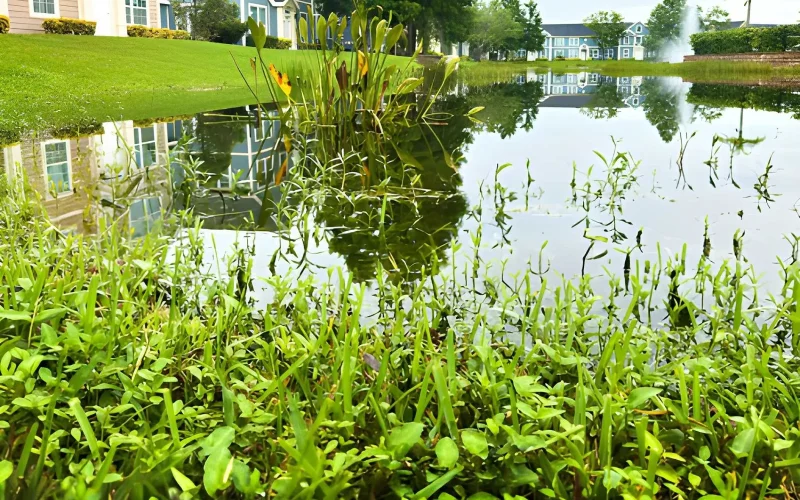
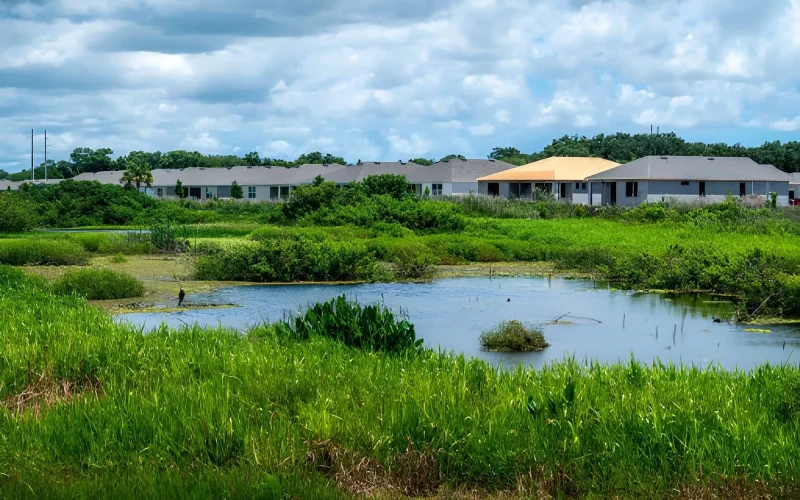
Tualatin sits low in the Tualatin River watershed. Nyberg Creek, Hedges Creek, and low-lying valley floor thread through it, holding water instead of shedding it. Add the area’s clay-heavy soils, plus newer construction on lots that were farmland or floodplain a generation ago. The result is a city where wetland and vegetated-corridor questions come up far more than in a typical Portland-metro suburb.
The agency that actually screens most Tualatin projects first isn’t the state. It’s Clean Water Services (CWS), the district that manages surface water for the Tualatin River basin. CWS runs a free Sensitive Area Pre-Screening that checks for regulated resources within 200 feet of a proposed project. That’s not just at the property line. That 200-foot radius is why a lot that looks dry from the yard can still land inside a Vegetated Corridor. It depends on what the screen finds. It’s also why we run that pre-screen before we ever price a design.
Oregon’s Wetland Regulations (DSL) and How They Apply Here
Two regulators stack on most Tualatin sites. The state layer is the Department of State Lands (DSL). DSL issues a removal-fill permit under Oregon’s Removal-Fill Law (ORS 196.795–990) once a project crosses the 50-cubic-yard threshold. That threshold drops to any amount in Essential Salmonid Habitat or a designated mitigation site. Larger or federally connected impacts also route through a joint application with the U.S. Army Corps of Engineers. That’s because state and federal wetland jurisdiction usually overlap on the same acreage.
The local layer is Clean Water Services. If the CWS pre-screen finds a Sensitive Area or Vegetated Corridor, three things become required before the city issues permits. Those three things are: a Sensitive Areas Certification, a delineation report, and a Service Provider Letter. CWS also requires proof that DSL and Army Corps authorizations are in hand. Only then will it sign off on any work inside the corridor itself. In practice, that means sequencing the DSL and CWS timelines correctly from the first site visit. You can’t patch them together after a stop-work order.
Native Plant Requirements Inside a Vegetated Corridor
If any part of a project sits inside a CWS Vegetated Corridor, the plant palette isn’t a design decision. It’s a compliance one. CWS specifies which native species satisfy corridor planting requirements. Any invasive vegetation removed from the corridor has to follow the methods in the district’s own Integrated Pest Management Plan. A crew can’t just reach for its usual approach. That’s one reason we keep wetland mitigation in-house, instead of splitting the job between a consultant and a separate crew. The planting plan has to satisfy the regulator and still look intentional once it fills in.
Our Wetland Mitigation Process in Tualatin, OR
A lot of firms show up when you search wetland mitigation contractor near me in Tualatin, OR. Many are environmental consultants who hand you a report and leave the construction to someone else. We run the whole thing:
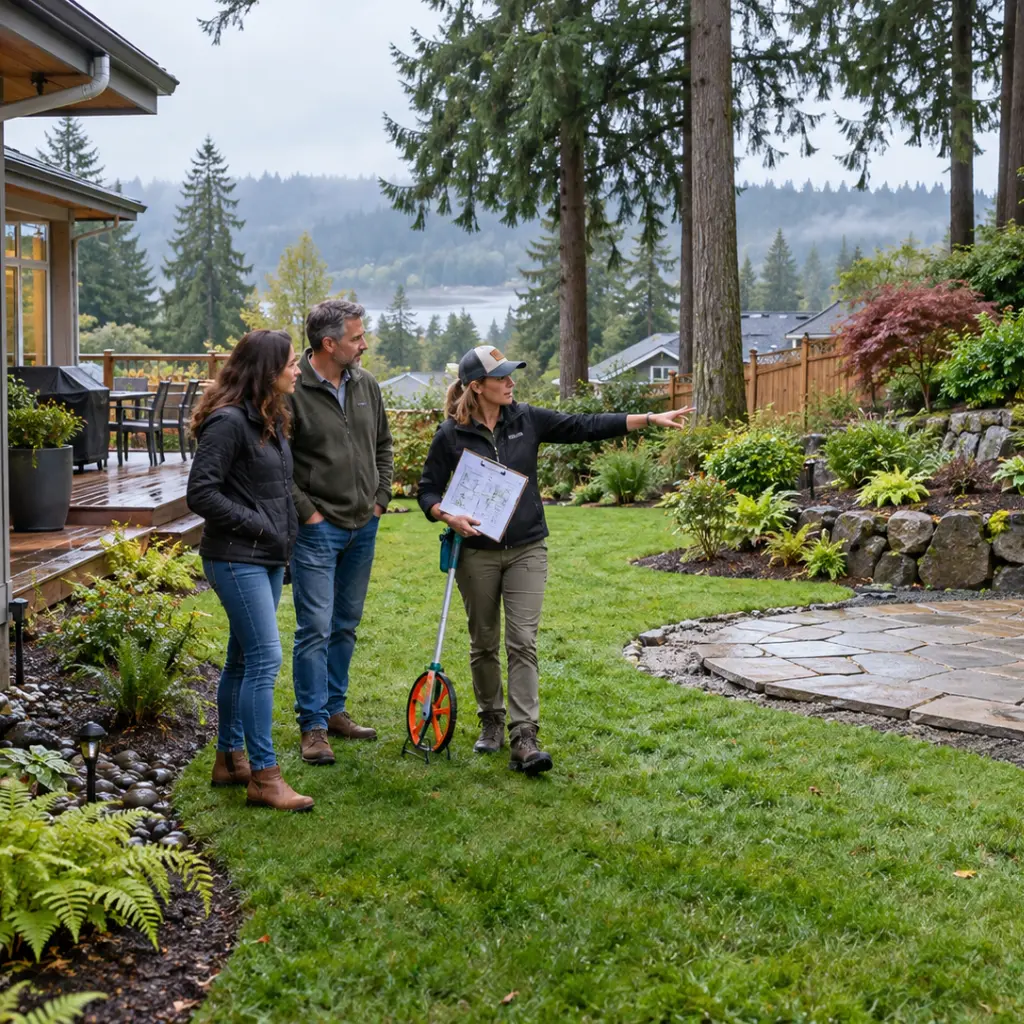
- Free site walk — we coordinate the CWS Sensitive Area Pre-Screening and flag likely wetland boundaries before any design work starts.
- Delineation and permitting — we bring in the wetland delineation, then prepare the DSL removal-fill and CWS Service Provider Letter applications together. That way, the timelines don’t fight each other.
- Mitigation and native planting — once we get plan approval, our own licensed crew installs the compensatory planting. That might mean restoring a Vegetated Corridor on-site, or coordinating an off-site credit purchase.
- Monitoring and closeout — we track the monitoring reports CWS and DSL require until the site passes and the file closes.
Maybe your project is really about a new patio, driveway, or backyard build. The wetland question might be the only thing standing in your way. If so, our landscape design and development team picks up right where mitigation leaves off, on the same site plan. We also cover the same sequencing question from the design side in our guide to landscape design in Tualatin, OR.
Frequently Asked Questions
What is wetland mitigation and when is it required?
Wetland mitigation is the restoration, creation, enhancement, or preservation of wetland required to offset unavoidable damage to a jurisdictional wetland. It replaces the acreage and function a project removes. Under the Oregon Department of State Lands removal-fill program, a permit kicks in at a specific threshold. A project needs one once it moves fill or material in a wetland or state water. The threshold is 50 cubic yards or more. Mitigation becomes part of that permit once a project can’t design around the impacts. Any project that can’t avoid removal or fill in a jurisdictional wetland needs mitigation. Common triggers include grading a bare lot, filling for a foundation, or running a driveway across a buffer. Clearing for a new patio near a creek can trigger it too.
What are Oregon's wetland regulations (DSL)?
The Department of State Lands administers the state’s Removal-Fill Law and issues removal-fill permits, often jointly with the U.S. Army Corps of Engineers when state and federal jurisdiction overlap. In Tualatin specifically, Clean Water Services adds a local layer on top of the state permit, requiring a Sensitive Areas Certification and a Service Provider Letter before the city will sign off on any work near a Sensitive Area or Vegetated Corridor.
How much does wetland mitigation cost in Oregon?
There’s no flat number for how much wetland mitigation costs. The real driver is which mitigation path a project takes. Options include on-site permittee-responsible restoration, purchasing credits from an approved mitigation bank, or paying into the state’s in-lieu fee fund. Delineation and consultant fees, DSL and CWS application fees, and wetland size and quality all move the total. For scale, DSL’s own reporting puts statewide in-lieu fee payments in the high tens of thousands of dollars per acre. That range is wide, depending on wetland function and location. That’s a fund-payment figure, not a retail price.
What is a wetland delineation?
A wetland delineation is the field survey that maps exactly where a jurisdictional wetland starts and stops on a property, using the same three-factor method regulators use everywhere: soil, vegetation, and hydrology. Two of the three have to be present for an area to count as wetland rather than upland. The delineator flags the boundary in the field, logs coordinates, and the resulting report becomes the map every later permit application is built on. If you’re searching for a wetland delineation service near me in Tualatin, or specifically a wetland delineation Tualatin OR provider, this is the first appointment to schedule — ideally alongside the CWS pre-screen so both agencies work from the same site data.
How long does the wetland mitigation process take?
Plan on weeks, not days, before construction starts. The CWS pre-screen typically returns in about two weeks. Delineation and the natural resource assessment report usually take another two to four weeks in the field and write-up. From there, a general permit can clear DSL review in a matter of weeks, while an individual permit — required for larger or more sensitive impacts — can run six months to well over a year with public notice and agency review. Native plant installation is seasonal, and CWS and DSL both require monitoring reports for several years after planting to confirm the mitigation site is actually functioning before the file closes.
Visit or Call Us
Grover’s Landscape Services & Design Serving Tualatin and the Portland metro area Phone: (503) 936-8910 Hours: Monday–Friday, 8:00 a.m.–5:00 p.m. Serving Tualatin and surrounding areas including West Linn, Sherwood, Newberg, Portland, Beaverton, Lake Oswego, and Clackamas.