
How Is an Outdoor Kitchen Installed in Clackamas, OR?
Category Outdoor Living
How Is an Outdoor Kitchen Installed in Clackamas, OR?
Grover’s Landscape Services & Design handles the outdoor kitchen installation Clackamas OR homeowners count on when they’re ready to move from planning to building. That’s the phase where design decisions meet trade coordination, permits, and construction requirements. In Clackamas County, Pacific Northwest weather and local building codes shape every built-in outdoor kitchen project.
By Yuriy Cheshev, Owner · Last updated 7th July 2026
What Is Involved in Outdoor Kitchen Installation?
At the construction level — not the design level — an outdoor kitchen install is a multi-trade, multi-phase process that most guides understate. For a built-in outdoor kitchen in Clackamas County, the construction sequence typically runs as follows.
Site Preparation and Foundation
The outdoor kitchen base needs a level, load-bearing surface. On an existing concrete patio in adequate condition, our crew can build the base structure directly. On soil, grass, or an aging slab, we pour a new concrete pad first. Clackamas County’s clay-heavy soils also demand grading and compaction, because that keeps the slab from shifting under Oregon’s winter moisture cycles. In addition, concrete work has to finish before temperatures drop below 40°F. As a result, late fall through early spring is a poor window for this phase in the Portland metro.
Rough-In Utility Connections
Next comes the utility work. A licensed Oregon plumber with a gas piping endorsement extends the gas line from the home’s supply, or installs a propane tank for properties not on natural gas. Separately, a licensed Oregon electrician handles the electrical rough-in — outlets, refrigerator circuit, and lighting wiring. In Oregon, each trade carries its own license and pulls its own permit. Notably, the landscape contractor cannot legally substitute for either trade. We coordinate all subcontractors and confirm the rough-in passes inspection before anyone closes up the base.
Base Structure Construction
Once inspectors sign off on the utilities, our crew builds the kitchen base — typically a steel stud frame or concrete block — over the slab and rough-in conduit. We build moisture management into this phase. Specifically, drainage ports prevent the water pooling common in Oregon’s rainy season, and we ventilate the appliance cavities properly.
Countertops and Appliances
After the base structure is complete and plumb, we template and install the countertops. Granite slabs need template fabrication and set time. Tile, by contrast, sets on-site but needs sealing for Pacific Northwest moisture exposure. Then the respective trades drop the appliances into their cavities and connect them to the rough-in. Each trade schedules its final permit inspection. Finally, trim, lighting fixtures, and sink connections close out the project.
Homeowners searching for an outdoor kitchen installer near me in Clackamas County should verify one thing above all: that the contractor manages multi-trade coordination. After all, a landscape contractor who sub-licenses gas and electrical work without proper permitting creates liability for the homeowner at resale.
What Appliances Can Be Included in an Outdoor Kitchen?
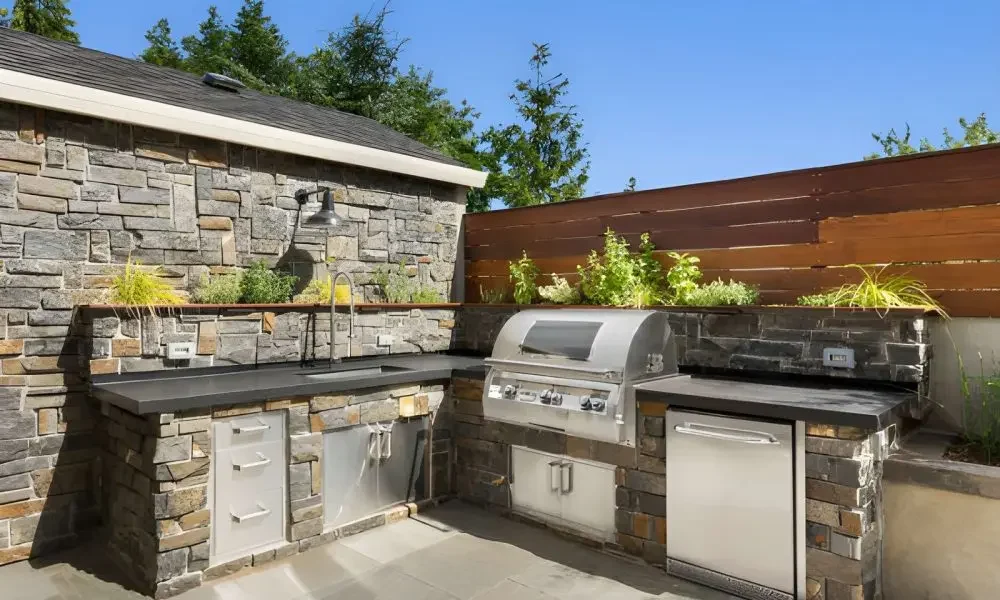
The appliances in a built-in outdoor kitchen drive two things: which utility connections you need and how we engineer the base structure. Here are the common options for Clackamas County outdoor kitchens.
Built-in grill — the foundation appliance. In fact, virtually every outdoor kitchen includes one. In built-in applications, we prefer gas or propane grills over charcoal for three reasons. First, manufacturers design them for permanent housing. Second, their drip systems direct grease away from the gas valve. Third, they skip the ash management that damages stainless cabinets. For Pacific Northwest conditions, stainless grade matters too: 316 marine-grade stainless handles sustained moisture better than 304 stainless, which suits covered or drier climates. In addition, side burners and built-in griddle plates are common additions.
Pizza oven — increasingly popular in Clackamas County outdoor kitchens. A wood-fired masonry pizza oven adds 400–600 lbs of weight, so we engineer the base structure to support it. Gas-fired pizza ovens weigh less and need gas rough-in rather than wood storage.
Outdoor refrigerator or beverage center — needs a dedicated electrical circuit. We specify outdoor-rated refrigerators, not indoor units repurposed outdoors, because they handle temperature extremes and moisture exposure. In fact, Clackamas County’s cool, damp winters make that specification important. Moreover, the compressor shouldn’t share circuits with other outdoor appliances.
Sink with running water — needs a cold water supply line and a drain connection. Here the drain solution matters. On non-urban Clackamas County lots, a direct drain to a dry well is common, while properties on municipal sewer connect to the home’s drain system. We also keep the supply line isolatable and drainable, which prevents freeze damage during Portland-area cold snaps.
Ice maker, warming drawer, and wine cooler are common premium additions. Each one needs an electrical circuit, and ice makers additionally need a water supply line.
How Much Does Outdoor Kitchen Installation Cost in Clackamas, OR?
Outdoor kitchen installation cost in the Clackamas County and Portland metro market starts with two realities. Oregon’s construction labor rates run roughly 12% above the national average. On top of that, the multi-permit, multi-trade coordination every built-in outdoor kitchen requires here adds to every project.
Entry-level: Gas grill, basic concrete block base, granite tile or concrete countertops, no sink or refrigerator: $8,000–$18,000 installed. For example, this is achievable on an existing concrete patio with an accessible gas stub-out.
Mid-range: Gas grill, outdoor refrigerator, stainless base structure, granite slab countertops, built-in lighting: $18,000–$40,000 installed. This is the most common scope in Clackamas County’s residential market.
Premium custom: Full appliance suite (grill, pizza oven, refrigerator, ice maker, sink), stone countertops, integrated covered structure, and electrical sub-panel: $40,000–$80,000+. Projects at this scope are effectively outdoor room additions. Therefore, they require coordinated design, engineering, and construction management across multiple trades.
Contact Grover’s Landscape for a free on-site estimate that accounts for your specific appliance scope and site conditions.
Do You Need a Permit for an Outdoor Kitchen in Clackamas, OR?
Yes. Any built-in outdoor kitchen with gas, electrical, or plumbing connections needs permits from the Clackamas County Building Codes Division.
Gas line installation: This needs a mechanical/gas permit. Oregon law requires a licensed Oregon plumber with a gas piping endorsement to perform all gas piping work. In addition, the county requires a gas pressure test and inspection before appliance connection.
Electrical installation: This needs an electrical permit. On non-owner-performed projects, Oregon law requires a licensed Oregon electrical contractor to complete all electrical work. Every circuit, sub-panel, and fixture installation then goes through inspection.
Building permit: You need one if the outdoor kitchen includes any covered structure — a shade cover, pergola, or attached roof — or if the base structure triggers structural review under the Oregon Residential Specialty Code.
Clackamas County processes permits through its Development Direct online system. Alternatively, you can submit permits in person at the Building Codes Division at 150 Beavercreek Road, Oregon City (phone 503-742-4240).
As a contractor for built-in outdoor kitchen Clackamas County projects, Grover’s Landscape manages the overall timeline and subcontractor coordination. As a result, permits get pulled in the correct sequence — building permit first when required, then trades — and final inspections get scheduled without delaying completion.
How Long Does It Take to Install an Outdoor Kitchen?
Outdoor kitchen installation time in Clackamas County depends on scope and Oregon’s weather window for concrete work. Here’s how the phases typically break down.
Pre-construction: Site assessment, design finalization, subcontractor coordination, and permits take 3–6 weeks. Clackamas County typically takes 5–15 business days for electrical and plumbing permits, while building permits with plan review take longer.
Site prep and foundation: Slab prep and pour take 1–3 days, plus a minimum 7-day concrete cure. We don’t schedule concrete work from November through February in the Portland area, because ground temperatures regularly drop below 40°F during that window and affect cure integrity.
Utility rough-in: Each licensed trade needs 1–2 days, coordinated to enable sequential inspections.
Base structure and countertops: Base framing, countertop template, fabrication, and installation take 3–7 days. In addition, granite slab fabrication typically takes 1–2 weeks from template to delivery.
Appliances and finishing: Appliance installation, final connections, and close-out take 1–2 days.
In total, a mid-range outdoor kitchen runs 8–14 weeks from contract signing. Spring and early summer are optimal in the Portland metro. The weather cooperates for concrete work, and the kitchen is ready before peak outdoor entertaining season.
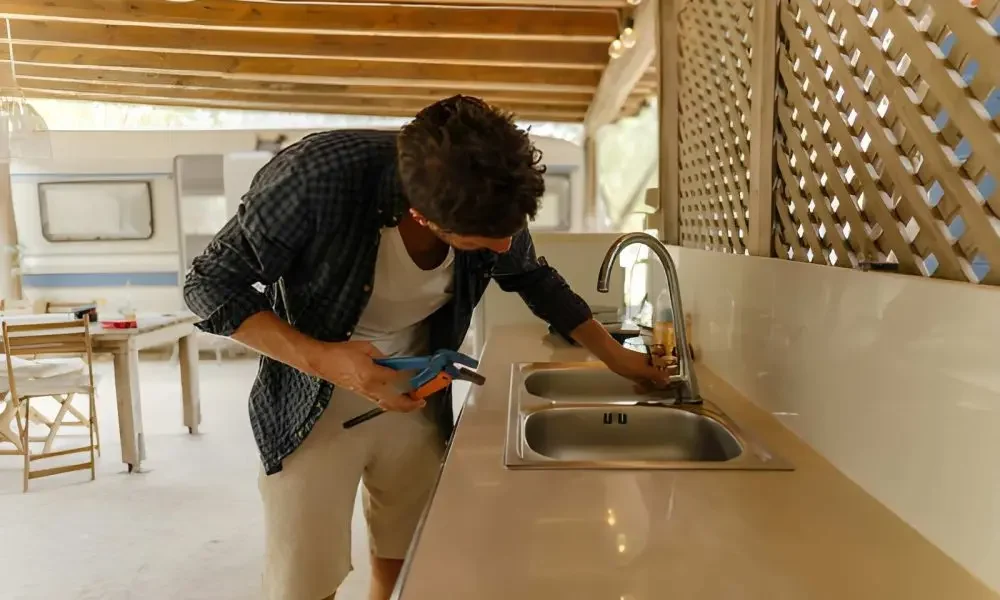
Grover’s Landscape for Outdoor Kitchen Installation Near Clackamas
If you’re searching for the best outdoor kitchen installer in Clackamas OR or outdoor kitchen installation near me Portland, one question matters most. Has the contractor actually managed built-in outdoor kitchen projects — coordinating licensed gas plumbers, electricians, and concrete subcontractors — in Clackamas County’s permit environment?
Grover’s Landscape Services & Design is an Oregon-licensed landscape contractor (CCB #100592) with 30 years of design-build experience across the Portland metro. As an outdoor kitchen contractor Clackamas County homeowners trust, we’ve managed multi-trade projects from site assessment through final permit inspection. In practice, we coordinate all subcontractors and permit sequencing, so homeowners aren’t independently tracking three separate licensed trades and permit applications.
As an outdoor kitchen builder Portland metro homeowners rely on for complete project delivery, we also integrate the kitchen with surrounding hardscape — paver patio, fire pit, drainage, and outdoor lighting — so the result is a cohesive outdoor living space. For more, see our outdoor kitchen design guide for design-phase decisions, our paver patio installation for the surrounding surface, and our fire pit installation guide for fire features that complement an outdoor kitchen.
Request a free outdoor kitchen estimate, and we’ll assess the site, scope the trades, and give you a project timeline before any work begins.
Frequently Asked Questions
What's involved in outdoor kitchen installation?
A built-in outdoor kitchen installation runs through several phases: site preparation and concrete foundation work; gas and electrical rough-in by separately licensed Oregon contractors (a licensed plumber for gas, a licensed electrician for electrical); base structure construction over the inspected rough-in; countertop templating and installation; appliance installation with final utility connections; and sequential permit inspections. The landscape contractor coordinates all phases and subcontractors. Oregon law requires separate licensed contractors for gas and electrical work.
How much does outdoor kitchen installation cost in Clackamas, OR?
In the Clackamas County and Portland metro market, entry-level built-in outdoor kitchens (gas grill, basic base, no sink or refrigerator) run $8,000–$18,000 installed. Mid-range projects with a full appliance suite, stainless base, and granite countertops run $18,000–$40,000. Premium custom outdoor kitchens with full appliances, a covered structure, and an electrical sub-panel run $40,000–$80,000+. Oregon’s labor rates run roughly 12% above national averages, and multi-permit requirements add cost to every project.
Do I need a permit for an outdoor kitchen in Clackamas, OR?
Yes, for any project with gas, electrical, or plumbing connections. Clackamas County requires a gas/mechanical permit (work performed by a licensed Oregon plumber), an electrical permit (work by a licensed Oregon electrician), and a building permit if the project includes a covered structure. The county processes permits through the Building Codes Division at clackamas.us/building. Grover’s Landscape coordinates permit applications with each licensed subcontractor and makes sure they’re pulled in the correct sequence.
What appliances can be included in an outdoor kitchen?
Built-in outdoor kitchens in Clackamas County commonly include a gas or propane grill (most projects), a side burner or griddle, an outdoor-rated refrigerator or beverage center, a sink with water supply and drain, a pizza oven, an ice maker, a warming drawer, and a wine cooler. Each appliance that needs a gas or electrical connection triggers separate permit requirements. For Pacific Northwest conditions, we specify 316 marine-grade stainless steel over 304 stainless for appliances in uncovered or semi-covered outdoor kitchens.
How long does outdoor kitchen installation take?
For a mid-range project in Clackamas County: 3–6 weeks pre-construction (permitting and subcontractor coordination), 1–3 days for site prep and concrete pour plus a 7-day cure, 1–2 days per trade for rough-in, 3–7 days for base structure and countertops, and 1–2 days for appliances and finishing. In total, expect 8–14 weeks from contract signing. Spring and early summer are the optimal windows, because we shouldn’t pour concrete when ground temperatures fall below 40°F, which limits construction from November through February in the Portland metro.
Call or Visit Us
Grover’s Landscape Services & Design Lake Oswego, OR Phone: (503) 936-8910 License: Oregon CCB #100592 | Licensed & Insured Rating: 4.8 Stars
Serving Clackamas, Oregon City, Happy Valley, Milwaukie, Lake Oswego, Tualatin, and the greater Portland metro.